

A vehicle’s undercarriage is exposed to road grime, leaking fluids, grease, mud, dust, and other contaminants every time it is driven. Because these areas are difficult to reach during an ordinary car wash, buildup can remain on suspension parts, chassis components, wheel wells, and protective panels for years.
The results of professional steam cleaning before and after treatment can be dramatic. Steam helps loosen stubborn contamination in tight spaces while using controlled heat and moisture. The following examples below illustrate how dirt, oil, and road buildup may change before and after steam cleaning a car undercarriage.
What Does Undercarriage Steam Cleaning Remove?
Professional undercarriage cleaning is intended to remove or reduce contaminants that a conventional exterior wash may not reach. Depending on the vehicle’s condition, steam cleaning can address:
- Accumulated dirt and road film
- Grease and oily residue
- Mud around suspension and chassis components
- Contamination inside wheel wells
- Dust trapped on underbody panels
- Residue around mechanical components
- Buildup that hides original finishes and hardware
The final result depends on the vehicle, its age, existing leaks, previous treatments, and the condition of its finishes. Steam cleaning does not repair corrosion, fluid leaks, damaged coatings, or worn parts. It does, however, reveal a cleaner and more accurate view of the undercarriage, which can make inspection and future maintenance easier.
Example 1: Daily Driver With Dirt and Road Buildup
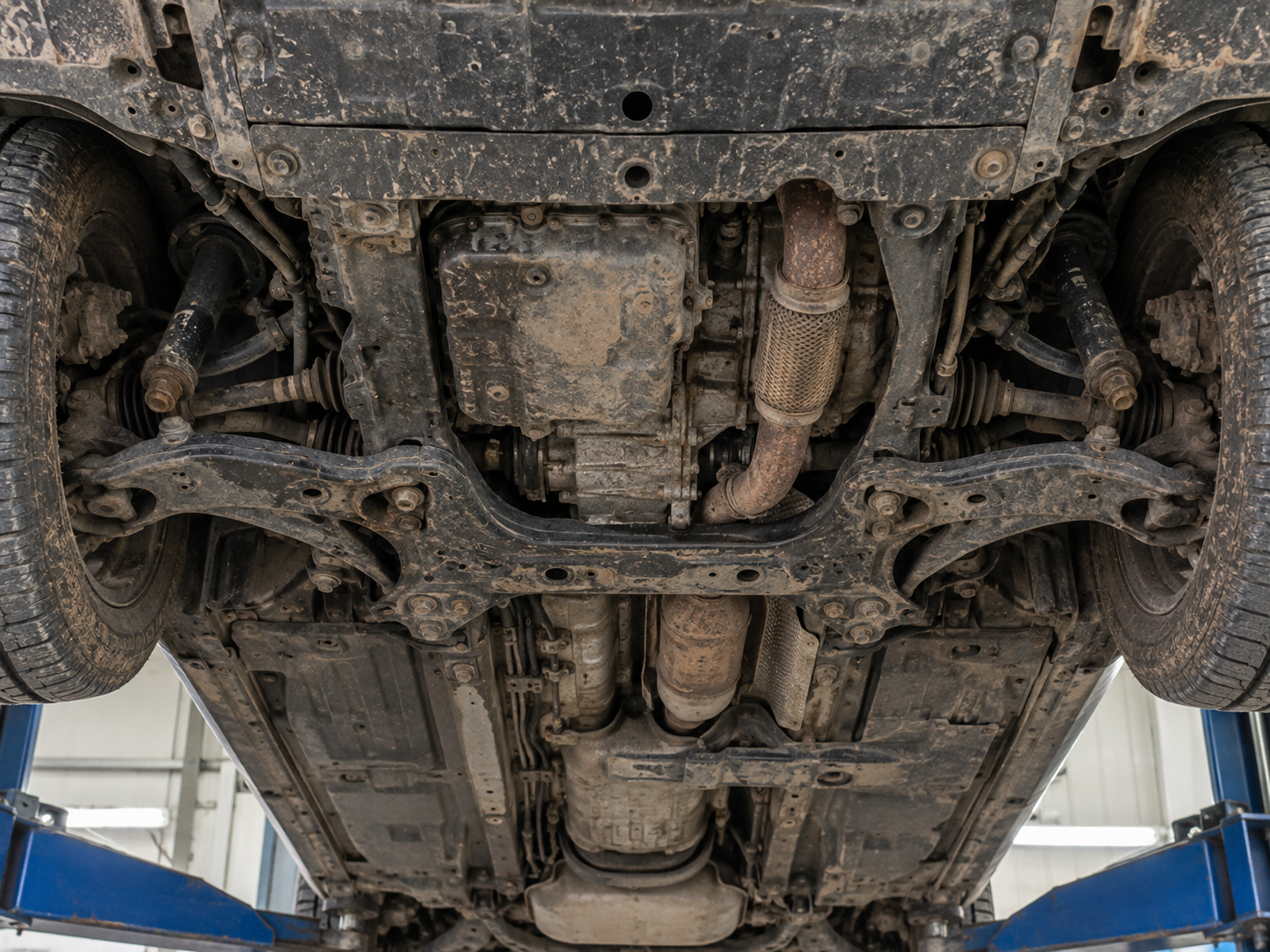
A regularly driven vehicle can collect a surprisingly dense layer of grime underneath its body. Dust combines with moisture and oily road film, forming dark residue across protective panels, suspension parts, seams, and fasteners. Wheel wells may also retain mud and debris thrown from the tires.
Before Steam Cleaning
Before treatment, the undercarriage in this example shows a widespread film of dirt rather than one isolated stain. The buildup makes individual surfaces appear dull and uniformly dark. Edges, mounting points, and component shapes are more difficult to distinguish because the contamination fills small gaps and settles around hardware.
Visible conditions before cleaning:
- Dark road film across underbody panels
- Dirt collected around bolts, brackets, and seams
- Mud residue near the wheel wells
- Dust attached to lightly greasy surfaces
- Reduced visibility of original colors and finishes
After Steam Cleaning
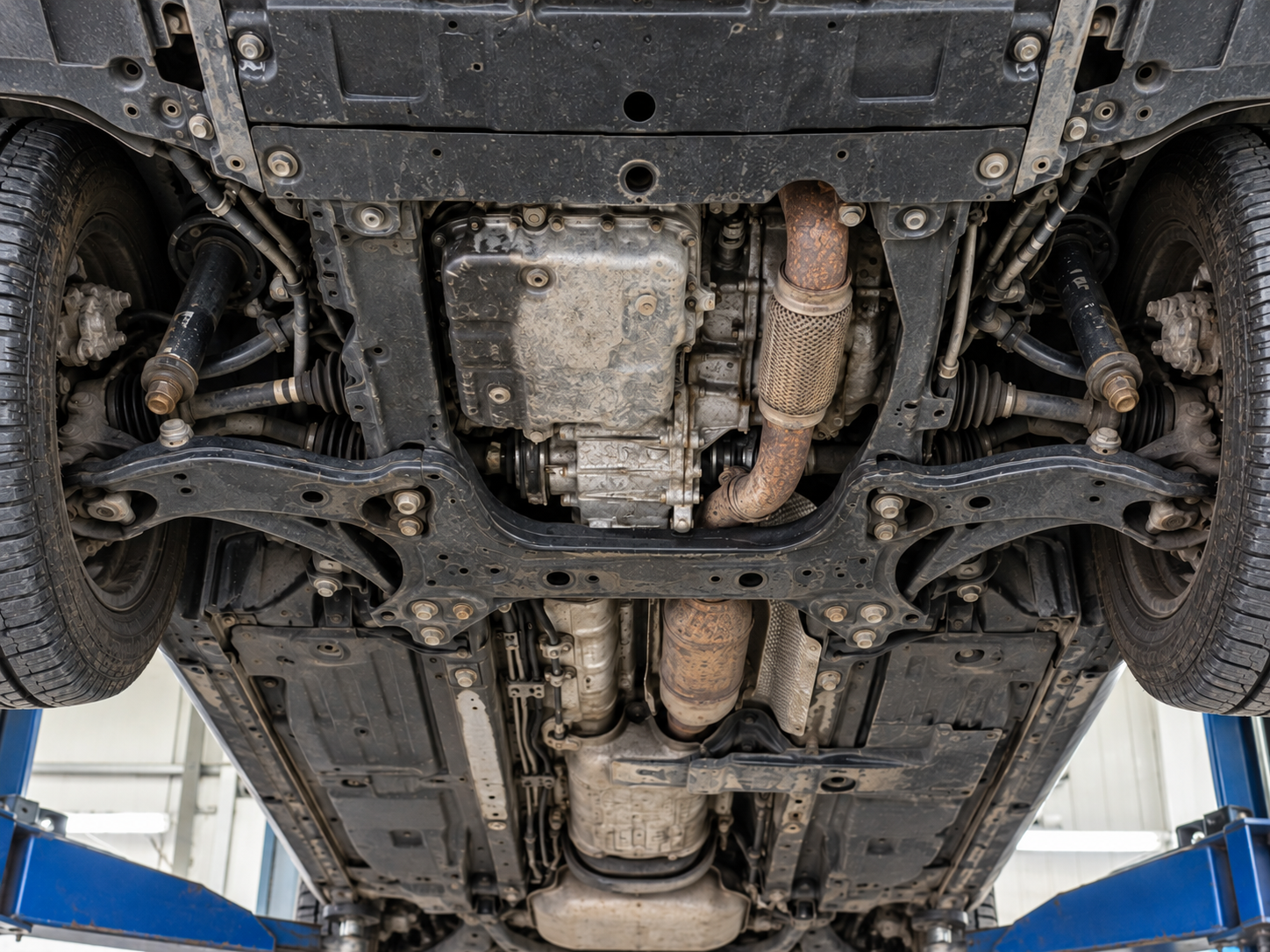
After controlled steam cleaning, the broad layer of road film is substantially reduced. Panel edges and fasteners become easier to see, while the wheel-well and suspension areas look more defined. The undercarriage is not artificially painted or disguised; it simply presents a cleaner view of the components and their existing condition.
Visible changes after cleaning:
- Cleaner protective panels and exposed surfaces
- Reduced dirt around seams and mounting points
- Less mud residue inside the wheel wells
- Improved visibility of brackets and hardware
- A more consistent, inspection-ready appearance
Example 1 Result
This before and after steam cleaning comparison demonstrates how general road contamination can mask underbody details. Removing the surface film produces a cleaner appearance and makes it easier to identify stains, coating wear, or maintenance concerns that were previously hidden.
Example 2: Performance Car With Oil and Grease Residue
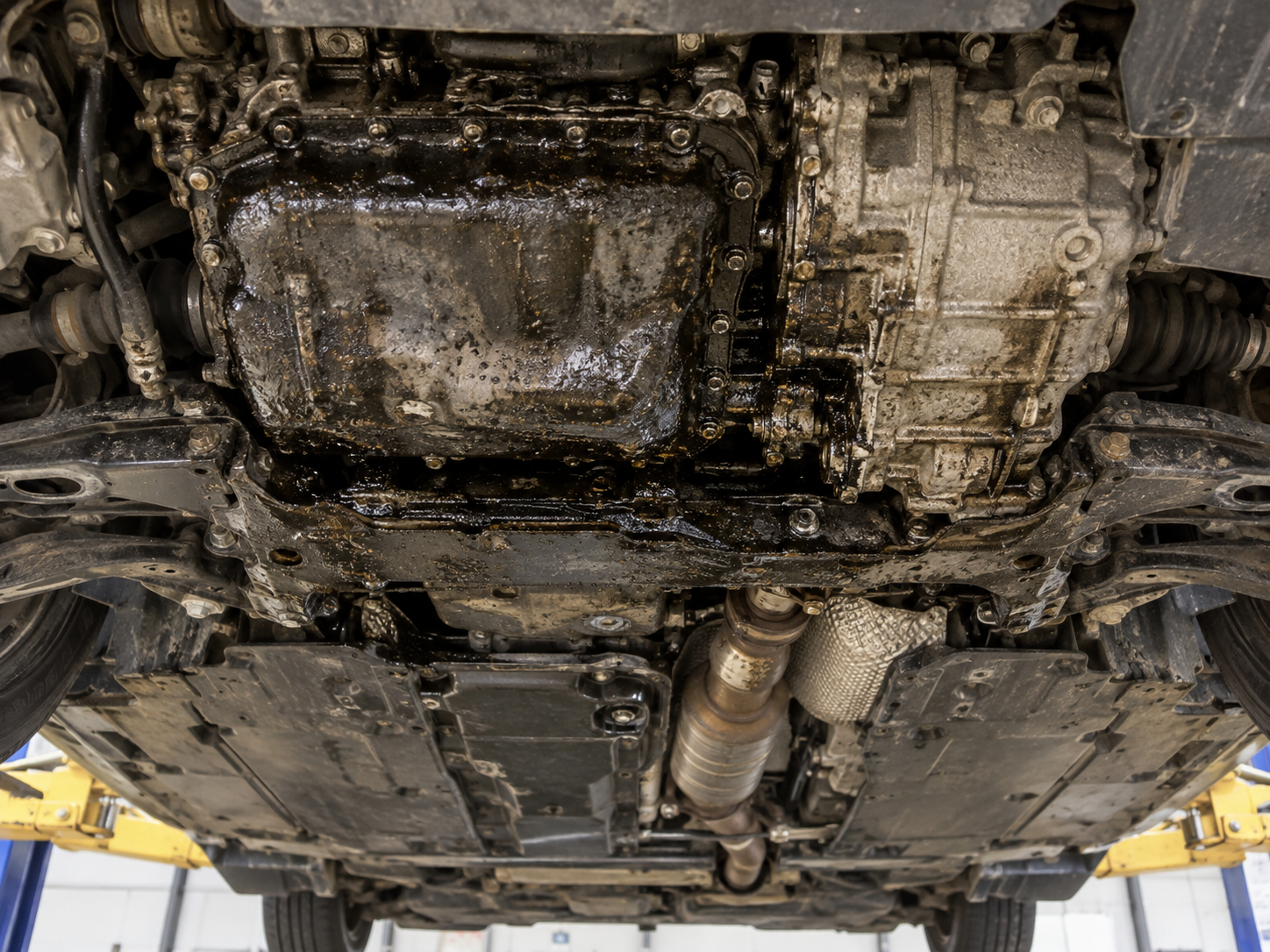
Performance and specialty vehicles may develop oily buildup around the engine underside, transmission area, splash shields, or nearby components. Even a small amount of fluid can attract dust and road debris, eventually creating a thick, sticky coating that ordinary rinsing may not remove effectively.
Before Steam Cleaning
In this example, the affected area has concentrated grease and oil residue rather than evenly distributed road dirt. Dust has bonded to the oily surface, creating a dark layer around mechanical components and adjacent panels. This contamination can make it difficult to determine whether a mark is old residue or evidence of an active leak.
Visible conditions before cleaning:
- Oily film around mechanical components
- Grease mixed with trapped dust
- Dark residue on nearby shields and panels
- Buildup concentrated around joints and edges
- Limited visibility during visual inspection
After Steam Cleaning
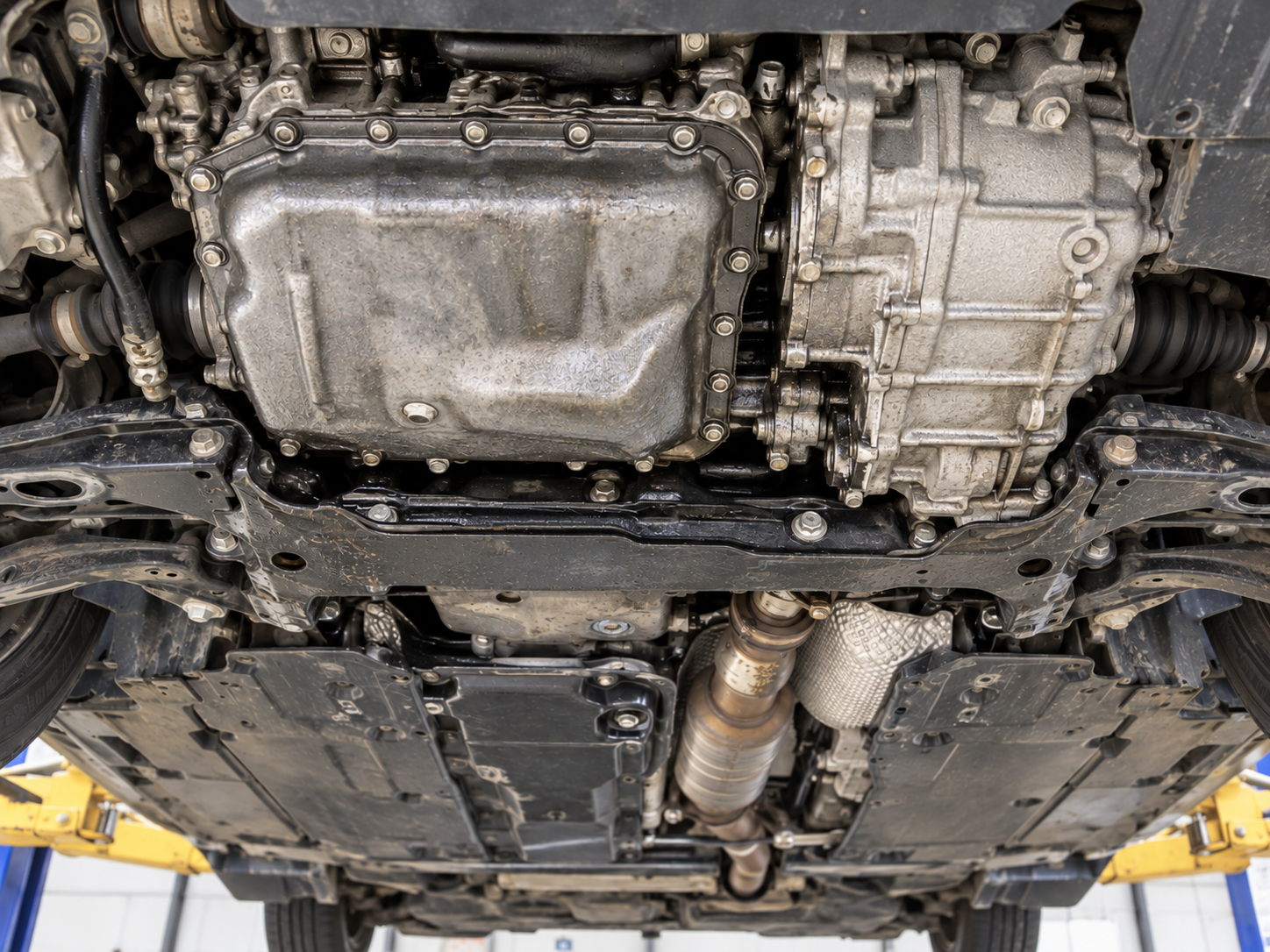
Following steam treatment and careful detailing, much of the greasy surface contamination is removed. The cleaned components show clearer edges, finishes, and connection points. Any remaining discoloration can then be evaluated more accurately without a heavy layer of residue obstructing the area.
Visible changes after cleaning:
- Reduced oily and greasy surface film
- Cleaner shields and surrounding panels
- More visible joints, edges, and fasteners
- Improved access for visual leak inspection
- A neater, more professionally maintained appearance
Example 2 Result
This steam cleaning before and after example highlights an important benefit of cleaning oily areas: improved visibility. Although detailing does not correct the source of a leak, removing old residue can help an owner or technician observe the area and distinguish fresh fluid from contamination left by earlier service or seepage.
Example 3: Classic or Collector Car With Long-Term Buildup
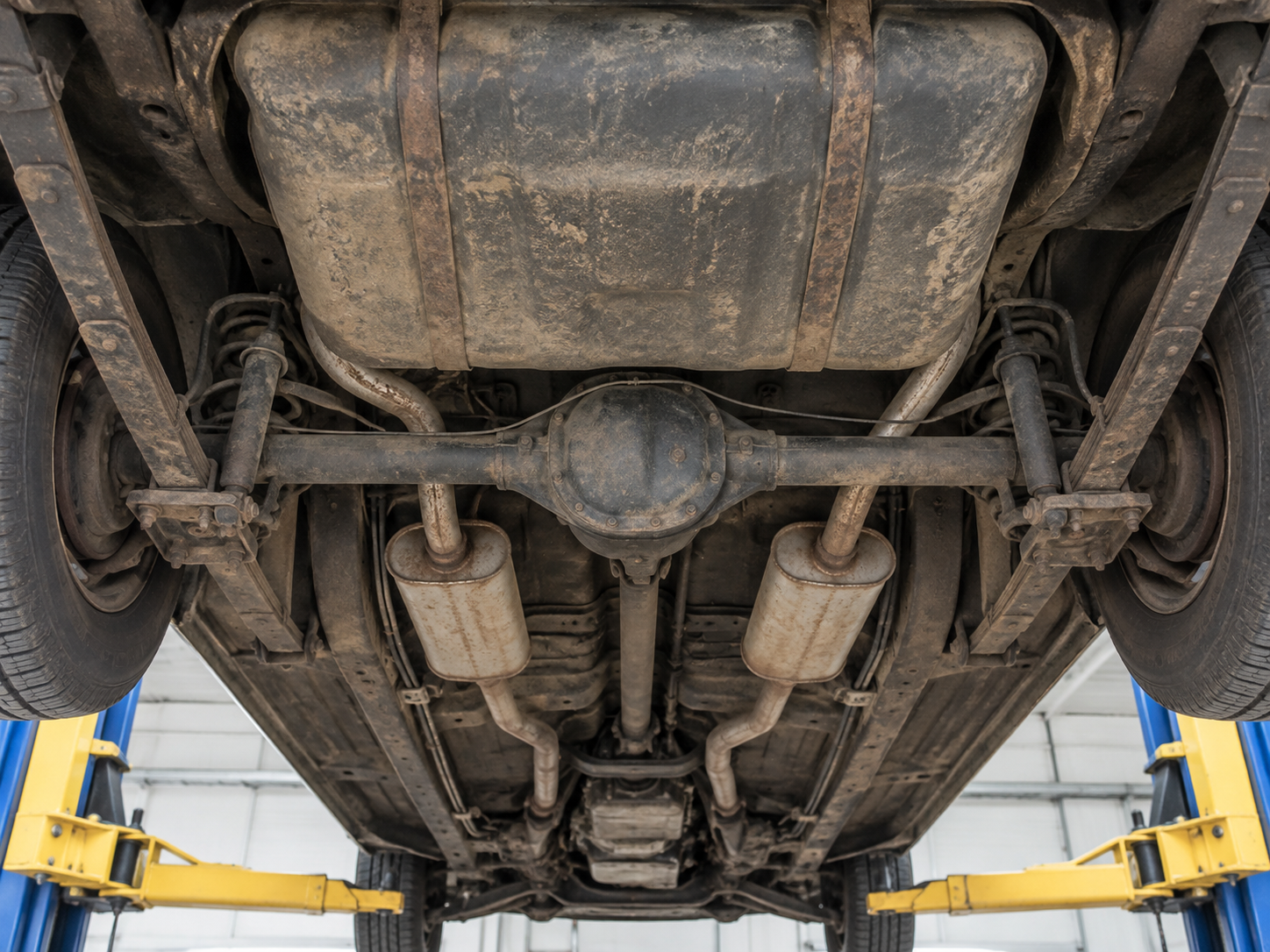
Classic and collector vehicles often require a more deliberate approach. Their undercarriages may feature older coatings, delicate finishes, aged hardware, or restored components that should not be treated like those of an ordinary daily driver. Years of storage dust, road residue, and light grease can also conceal historically or aesthetically important details.
Before Steam Cleaning
Before cleaning, this example has layered contamination across the chassis, suspension, and lower mechanical areas. The buildup softens the visual definition of individual parts and may hide factory finishes, restored surfaces, identification markings, or early signs of deterioration.
Visible conditions before cleaning:
- Long-term dust and road residue
- Greasy buildup around moving components
- Dirt packed into seams and recessed areas
- Dull-looking chassis and suspension finishes
- Obscured hardware and underbody details
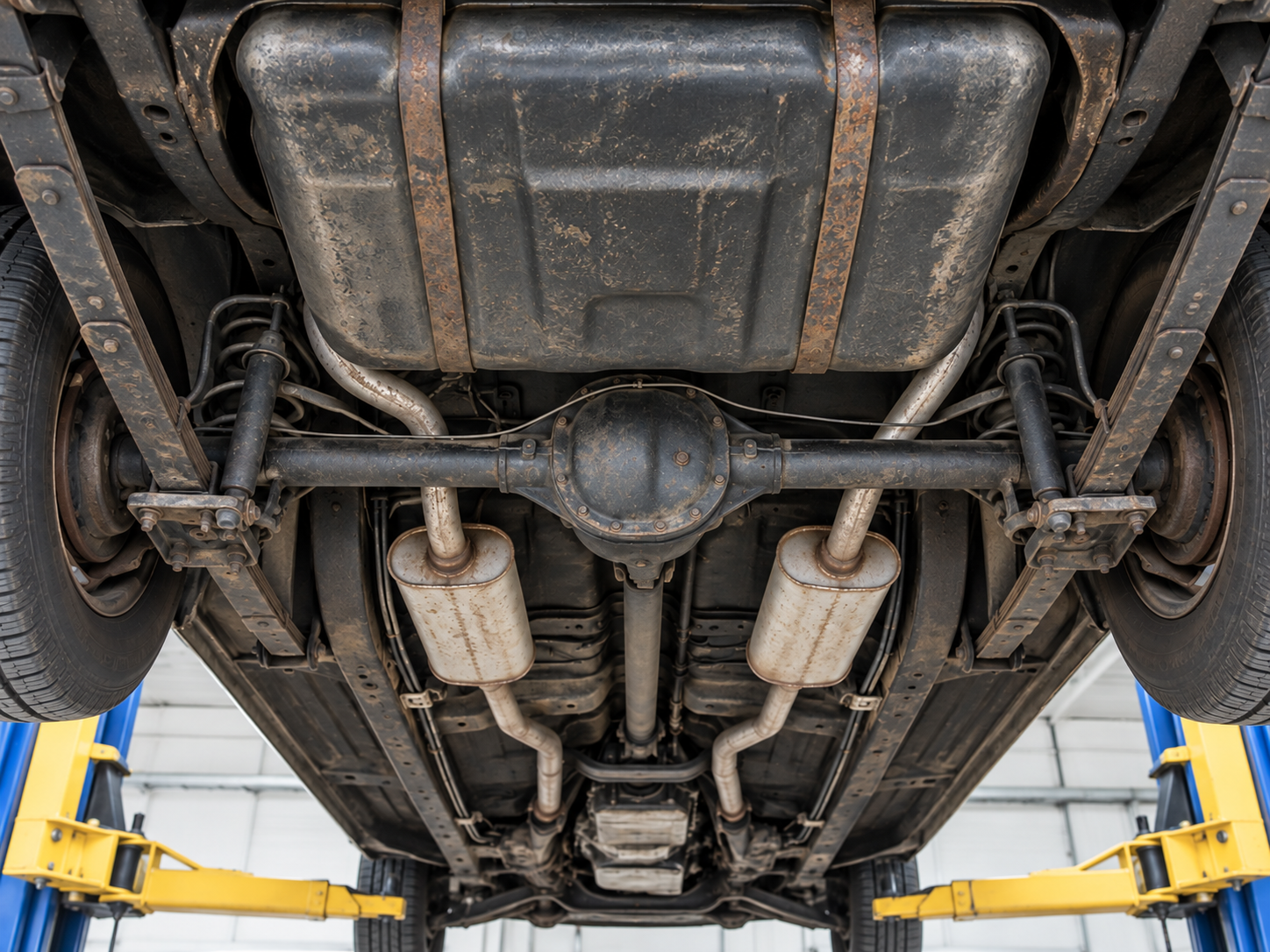
After Steam Cleaning
After a careful, vehicle-appropriate cleaning process, the undercarriage presents a clearer view of its finishes and construction. Suspension parts, fasteners, seams, and restored areas become more visually distinct. The result is especially valuable for presentation, documentation, maintenance planning, or preparation for a show or sale.
Visible changes after cleaning:
- Cleaner chassis and suspension components
- Reduced residue in seams and recessed areas
- Greater visibility of finishes and markings
- Improved definition around hardware and brackets
- A more presentable appearance for documentation or display
Example 3 Result
This before and after steam cleaning comparison shows why collector vehicles benefit from a careful, condition-sensitive approach. A properly cleaned undercarriage can support presentation and preservation by revealing details without attempting to conceal age, wear, corrosion, or other existing conditions.
Benefits of Professional Undercarriage Steam Cleaning
The most obvious benefit is a cleaner appearance, but professional undercarriage cleaning can provide several additional advantages:
- Improved inspection visibility: Removing grime makes it easier to see leaks, corrosion, damaged coatings, and loose or worn components.
- Better presentation: A clean undercarriage complements exterior and interior detailing, particularly on classic, collector, performance, and sale-preparation vehicles.
- Access to difficult areas: Steam can help loosen residue around seams, brackets, fasteners, and contoured components.
- Reduced heavy buildup: Removing layers of dirt, grease, and road film helps prevent contamination from continuing to accumulate.
- Clearer documentation: Consistent before-and-after photographs can support vehicle records, restoration documentation, or sales presentations.
Car Detailing and Undercarriage Steam Cleaning at Doctor Detail
Doctor Detail in Costa Mesa offers a wide range of car detailing services, including undercarriage steam cleaning as well as interior and exterior detailing. Our approach is suited to vehicles that deserve careful attention, from daily drivers and performance cars to classic and collector automobiles.
We work with prestigious and enthusiast-owned vehicles such as Ferraris, Porsches, Lamborghinis, BMWs, Mercedes, and more. Whether the objective is routine care, improved presentation, preparation for an inspection, or detailing before a show or sale, we can help determine which services fit the vehicle’s condition and the owner’s goals.
Schedule Undercarriage Steam Cleaning in Costa Mesa
The difference visible before and after steam cleaning can extend well beyond appearance. Removing dirt, oil, grease, and road buildup reveals more of the vehicle’s true condition, improves underbody presentation, and creates a cleaner foundation for inspection and ongoing care.
Contact Doctor Detail in Costa Mesa today to learn more about our undercarriage steam cleaning and complete exterior detailing services. Speak with our team about your vehicle, request additional information, or schedule an appointment for your classic, collector, performance, or luxury car.
