Choosing the right window film is about more than just appearance. The different types of car window tint vary in performance, durability, heat rejection, UV protection, glare reduction, and overall value. High-quality window tints help protect interior materials from heat and UV damage, preserving your car’s value. For drivers who want better comfort, more privacy, and added protection for their vehicle’s interior, understanding the types of window tint for cars is the first step toward making a smart investment.
In this buyer’s guide, we will break down the different types of car window tint, explain how each one works, and help you determine which option is best for your vehicle. Whether you are looking for an affordable entry-level tint or a premium solution that delivers top-tier performance, this guide will help you compare your options with confidence.
Why Understanding the Types of Car Window Tint Matters
Not all tint films are made the same. Some are designed primarily for appearance and privacy, while others are engineered to block heat, reduce glare, and protect against harmful UV rays. The best tint for one driver may not be the best choice for another.
Before selecting from the many types of window tint for cars, it helps to consider your priorities:
- Heat reduction: Important for warmer climates and improved cabin comfort
- UV protection: Helps protect your skin and reduces interior fading
- Privacy: Makes it harder for others to see into your vehicle
- Appearance: Enhances the overall style and finish of your car
- Durability: Determines how long the film will perform well without bubbling, fading, or discoloring
- Electronics compatibility: Some films can interfere with radio, GPS, or mobile signals
When choosing window tint, it’s important to understand visible light transmission (VLT), which measures how much light passes through the tint. A lower VLT percentage means less light gets through, resulting in a darker tint. Lighter tints provide subtle UV and heat protection without drastically altering visibility and are often legal in most states.
Darker tints offer increased privacy, reduced glare, and enhanced heat rejection, and are generally allowed on rear windows, while front side windows have stricter VLT requirements—often requiring more than 70% light transmission to comply with safety and legal standards.
When comparing the different types of window tint for cars, these factors can make a major difference in long-term satisfaction.
The Main Types of Car Window Tint
There are five primary types of car window tint commonly used today. Each offers its own combination of affordability, aesthetics, and performance.
1. Dyed Window Tint
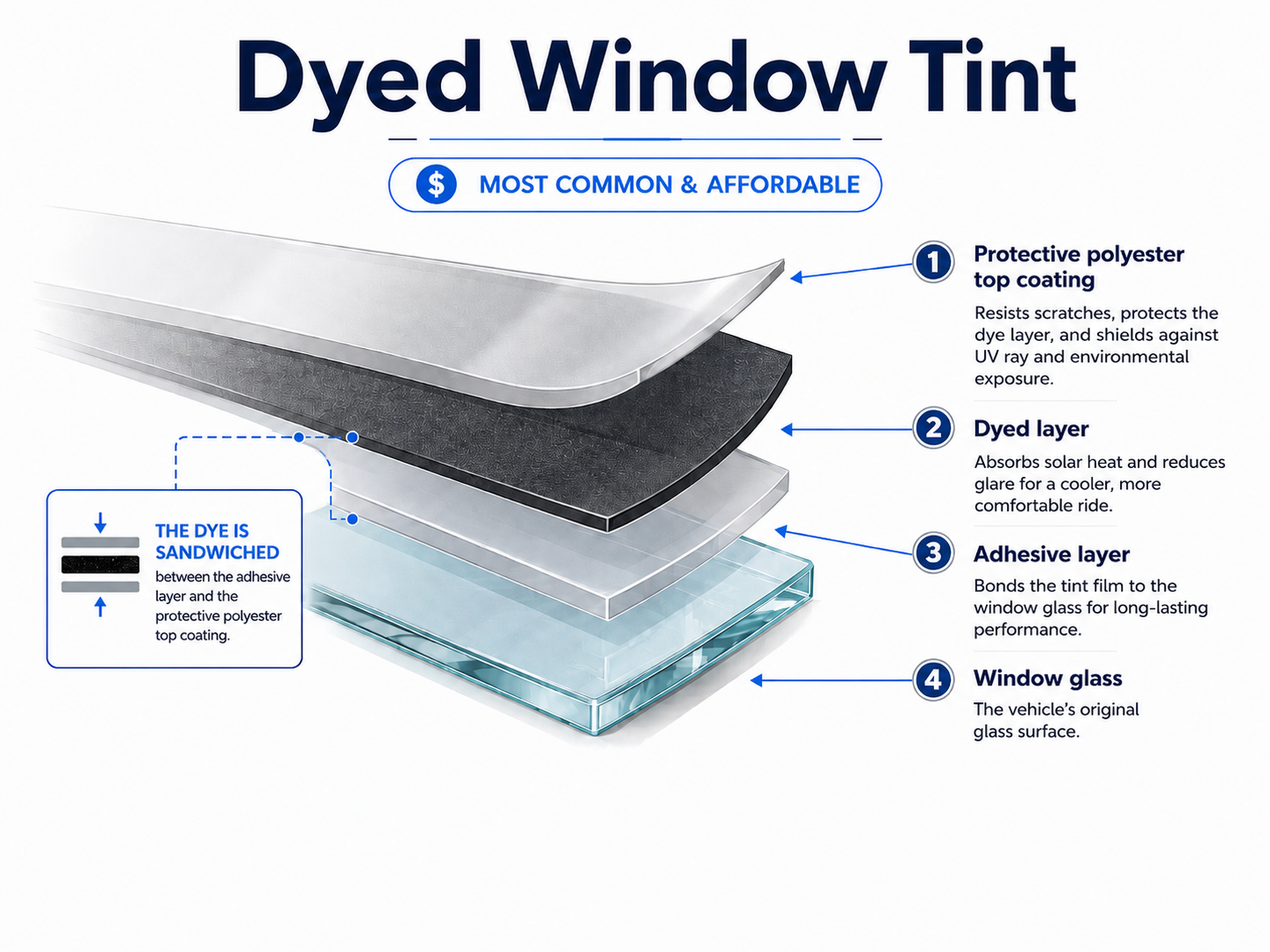
Dyed window tint is the most common and affordable option among the types of car window tint. Dyed tints use dyed layers and an adhesive layer, with the dye sandwiched between the adhesive and a protective polyester top coating to enhance durability and resistance to environmental factors.
This structure helps dyed window tint absorb solar heat, keeping the interior cooler and reducing reliance on air conditioning.
Pros of Dyed Window Tint
- More affordable than premium films
- Improves privacy and darkens windows
- Reduces glare
- Non-reflective appearance
Cons of Dyed Window Tint
- Lower heat rejection than higher-end options
- Can fade over time with prolonged sun exposure
- Shorter lifespan than more advanced tint films
Best For
Drivers looking for a low-cost option that improves appearance and privacy without a large investment.
2. Metalized Window Tint
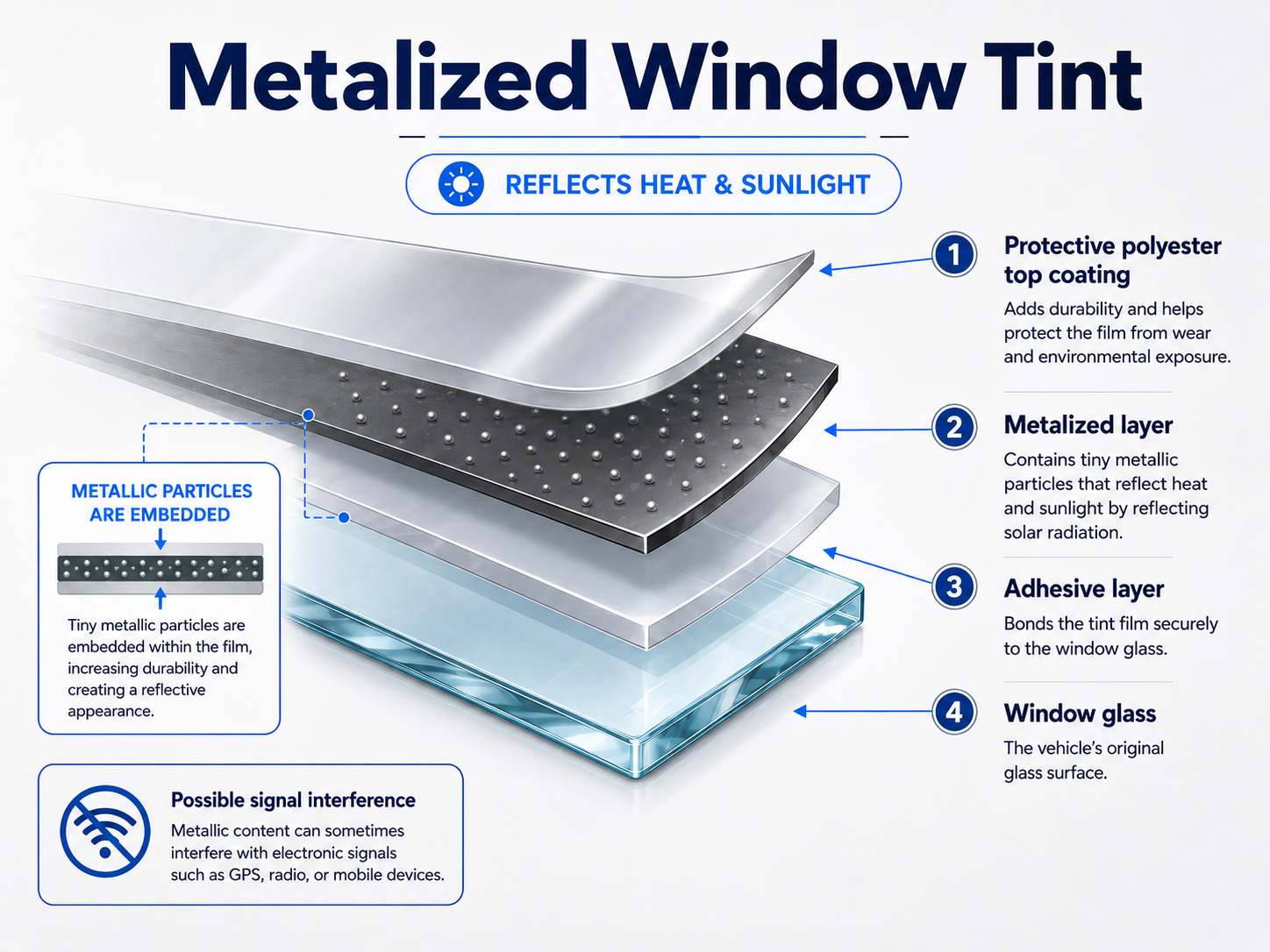
Metalized window tint, also known as metallic films, metalized films, metalized tints, or metallic tints, contains tiny metallic particles that reflect heat and sunlight.
These films are made by embedding tiny metallic particles within the film layers, which enhances durability and blocks heat by reflecting solar radiation. The reflective appearance of metalized tints is due to their metallic content, but it’s important to note that these films can sometimes cause signal interference with electronic devices.
This is one of the more durable different types of car window tint and is known for its strength and reflective finish.
Pros of Metalized Window Tint
- Good heat rejection
- Stronger and more scratch-resistant than dyed film
- Effective glare reduction
- Durable construction
Cons of Metalized Window Tint
- Reflective appearance may not appeal to every driver
- Can interfere with GPS, radio, phone, and other electronic signals
- Less modern than some newer tint technologies
Best For
Vehicle owners who want solid durability and heat control and do not mind a slightly reflective look.
3. Hybrid Window Tint
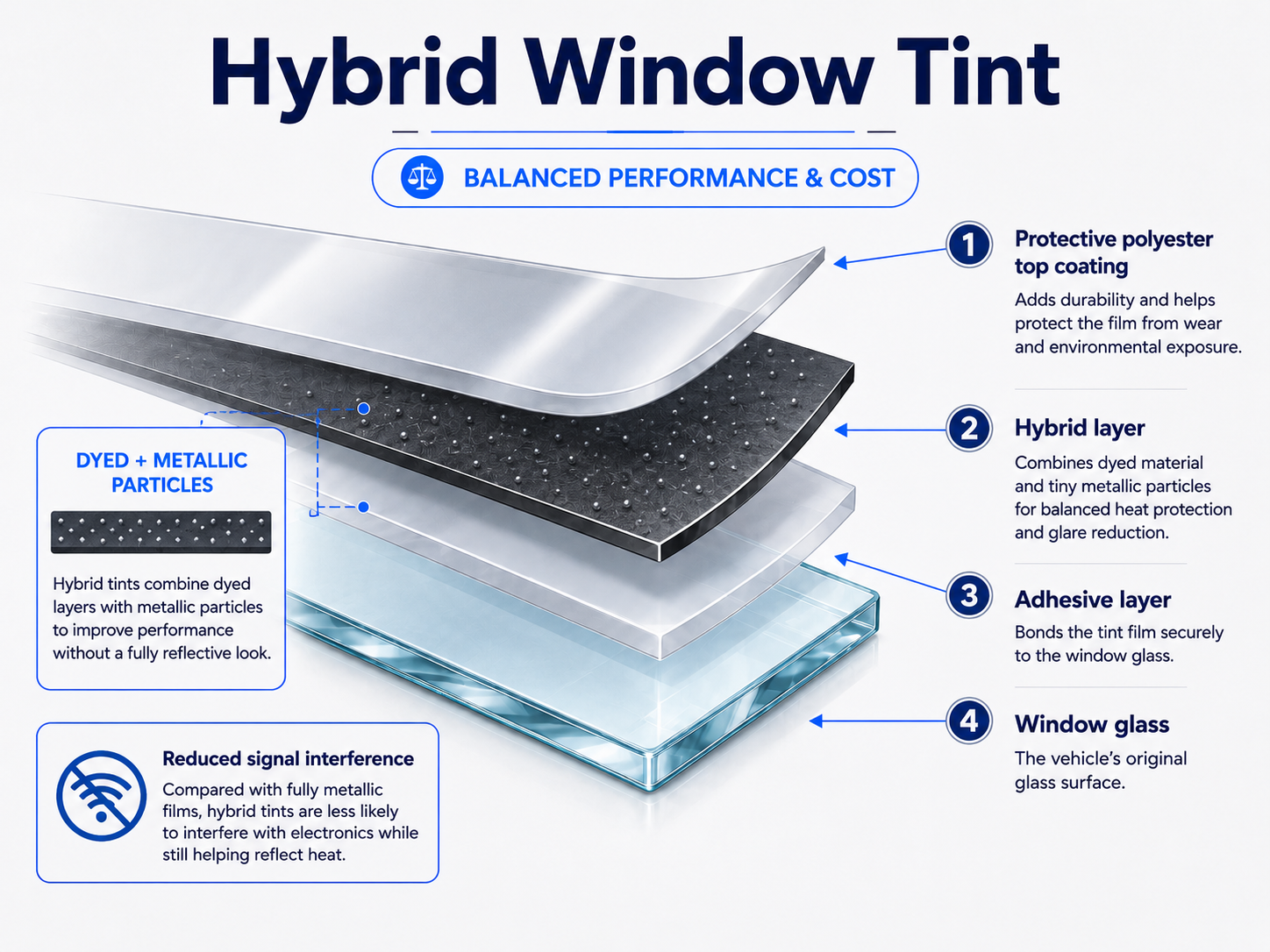
Hybrid tints combine dyed layers and metallic particles, providing balanced heat protection, improved glare reduction, and reduced signal interference without the mirror-like appearance of fully metallic films. Among the different types of car window tint, hybrid tints offer a middle ground between performance and cost.
While hybrid tints deliver effective heat protection, the best heat reduction is achieved with ceramic and carbon tints, whereas dyed tints remain the most affordable option.
Pros of Hybrid Window Tint
- Better heat rejection than dyed film
- Less reflective than fully metalized tint
- Improved durability
- Balanced price-to-performance ratio
Cons of Hybrid Window Tint
- May still cause slight signal interference
- Not as high-performing as carbon or ceramic film
Best For
Drivers who want a blend of affordability, appearance, and better overall performance.
4. Carbon Window Tint
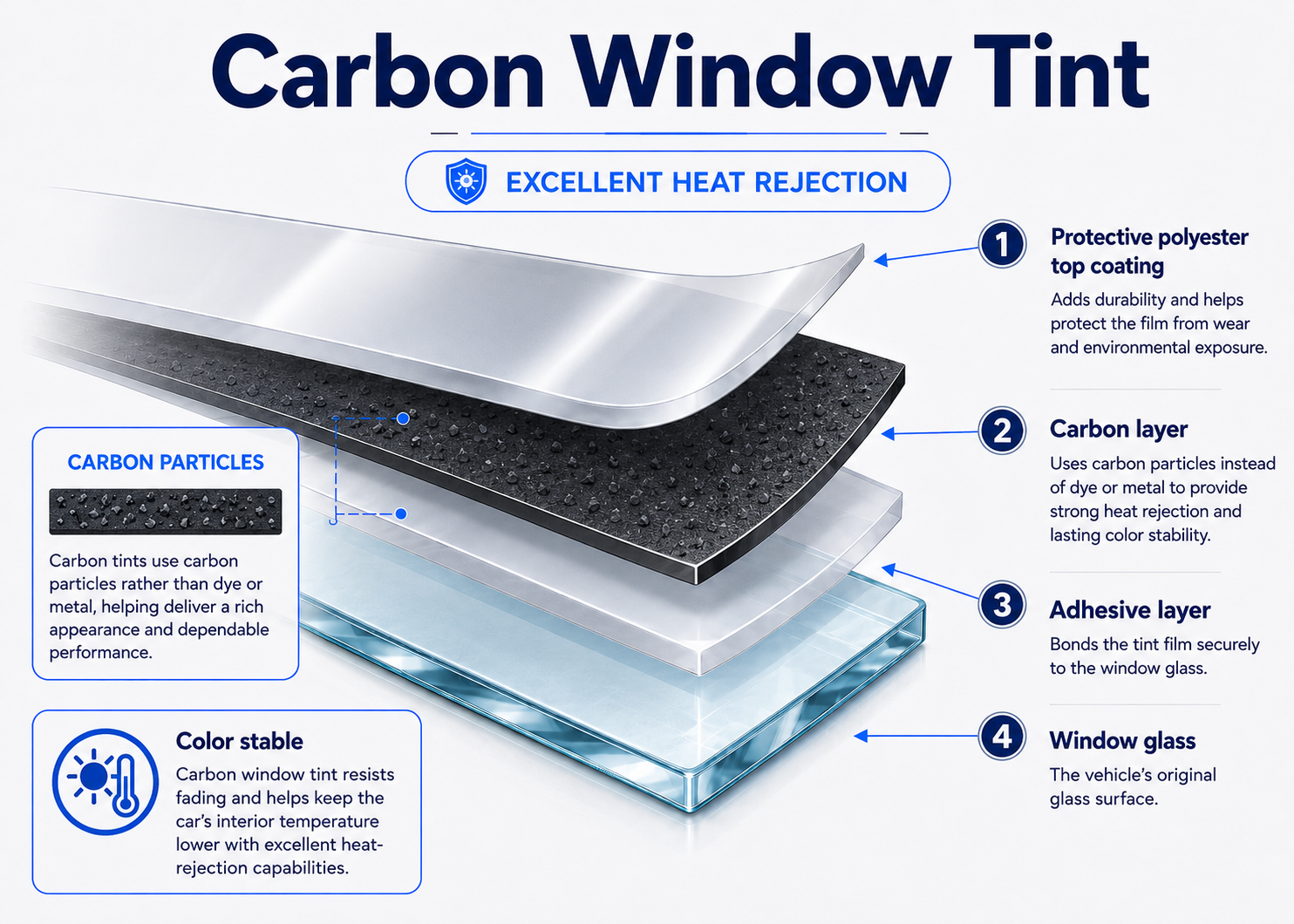
Carbon window tint is a high-quality option that uses carbon particles rather than dye or metal. Carbon tints are known for their color stability and their ability to keep the car’s interior temperature lower by providing excellent heat-rejection capabilities.
This type of tint does not fade over time, is effective at blocking UV rays, and is more expensive than dyed options. It is one of the most popular types of window tint for cars for drivers who want long-lasting performance without a shiny appearance.
Pros of Carbon Window Tint
- Excellent fade resistance
- Matte finish for a sleek, modern look
- Strong heat rejection
- No signal interference
- More durable than dyed and hybrid films
Cons of Carbon Window Tint
- More expensive than dyed, metalized, and many hybrid films
- Not as advanced as ceramic in overall performance
Best For
Drivers who want a premium look, strong performance, and long-term durability without stepping all the way up to ceramic.
5. Ceramic Window Tint
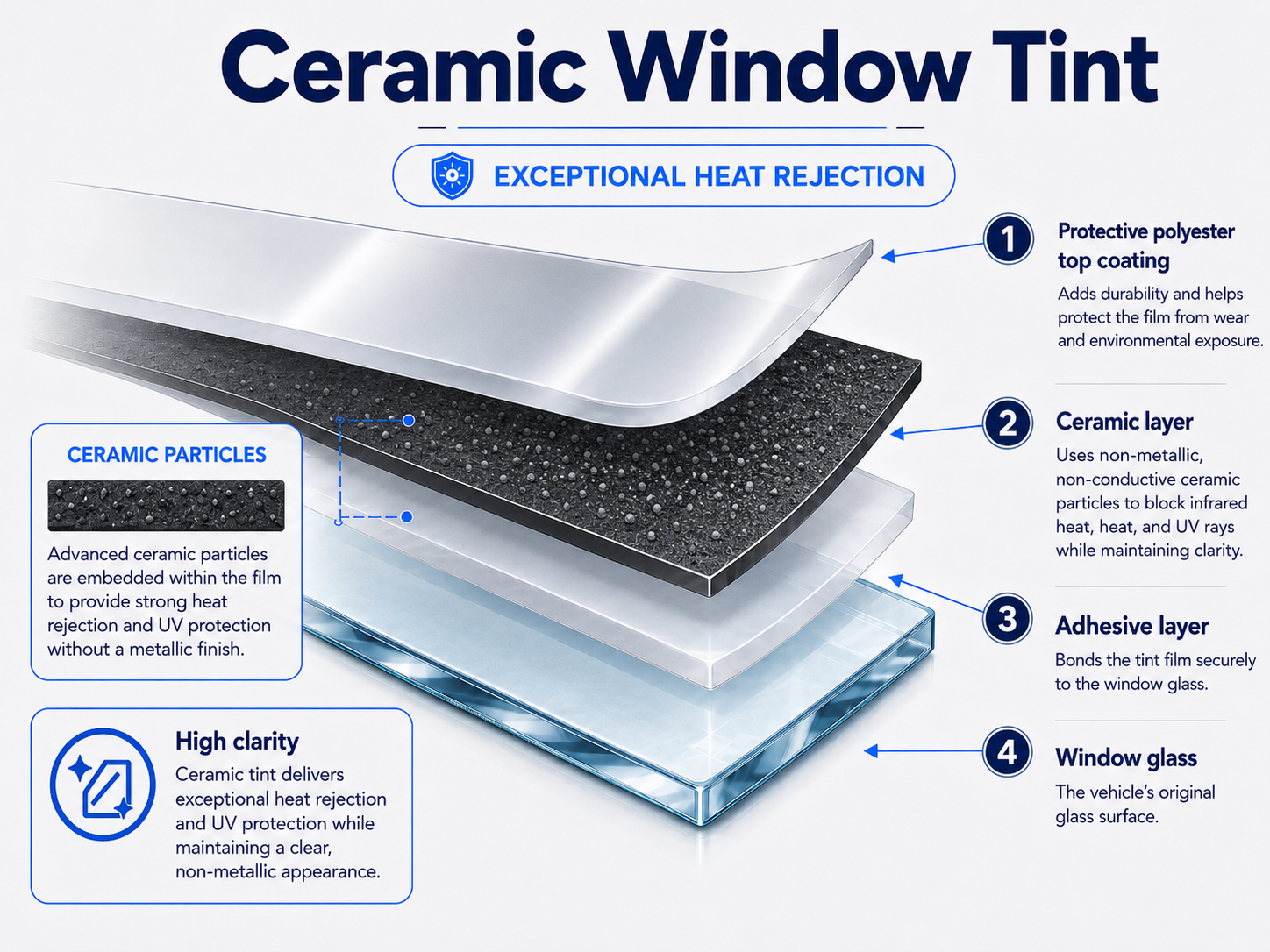
Ceramic tints and ceramic films are widely considered high quality tint options among the types of car window tint. These advanced films use non-metallic, non-conductive ceramic particles and technology to block infrared heat as well as heat and UV rays, providing exceptional heat rejection, UV protection, and clarity.
Ceramic films are especially effective at reducing heat, making them ideal for hot climates. Heat reduction is best achieved with ceramic and carbon tints.
Pros of Ceramic Window Tint
- Superior heat rejection
- Excellent UV protection
- High visibility and optical clarity
- No interference with electronics, radio, GPS, or phone signals
- Highly durable and fade-resistant
Cons of Ceramic Window Tint
- Higher upfront cost than other options
Best For
Drivers who want the highest level of performance, comfort, and long-term value.
Comparing the Different Types of Window Tint for Cars
To better understand the types of car window tint, it helps to compare them side by side.
Type of Window Tint | Cost | Heat Rejection | UV Protection | Appearance | Durability |
Dyed Tint | Lowest | Basic | Moderate | Dark, non-reflective | Lower |
Metalized Tint | Moderate | Good | Good | Reflective | Strong |
Hybrid Tint | Moderate | Good | Good | Balanced | Good |
Carbon Tint | Upper-mid range | Very good | Very good | Matte, rich finish | Excellent |
Ceramic Tint | Premium | Excellent | Excellent | Clean, high-clarity finish | Excellent |
Which Type of Car Window Tint Is Best for Your Vehicle?
The answer depends on your budget, driving habits, and performance expectations. Selecting the right window tint is crucial to ensure optimal protection, clarity, and aesthetic appeal for your vehicle. By choosing the perfect tint that matches your preferences and lifestyle, you can achieve the best results and satisfaction.
When deciding between the different types of car window tint, here is a simple way to narrow it down.
Choose Dyed Tint If:
- You want a more affordable tinting option
- Your main goals are privacy and style
- You do not need maximum heat rejection
Choose Metalized Tint If:
- You want durability and decent heat reduction
- You are comfortable with a more reflective look
- Electronic signal interference is not a major concern
Choose Hybrid Tint If:
- You want balanced value
- You are looking for better performance than dyed tint
- You want a mix of comfort, style, and affordability
Choose Carbon Tint If:
- You want a premium appearance
- You care about fade resistance and heat rejection
- You want better performance without metal interference
Choose Ceramic Tint If:
- You want the best overall performance
- You drive often in sunny or hot conditions
- You want top-level heat rejection, UV protection, and clarity
- You are making a long-term investment in your vehicle
Key Things to Consider Before Choosing Between the Types of Window Tint for Cars
Even after learning about the different types of window tint for cars, there are still a few practical factors to keep in mind before making your decision.
Your Climate
If you live in a warm, sunny area, premium options like carbon or ceramic often provide better comfort and long-term value because of their stronger heat rejection and UV-blocking performance.
Your Vehicle Type
Luxury cars, daily drivers, trucks, SUVs, and specialty vehicles can all benefit from different tint solutions. The best film may depend on your goals for appearance, privacy, and interior protection.
Installation Quality
Even the best film can underperform if it is installed poorly. Professional installation helps ensure a clean finish, proper adhesion, and lasting results. Professional installers use computer-cut patterns and controlled environments to ensure a precise fit and minimize issues like air bubbles during installation.
Why Professional Installation Makes a Difference
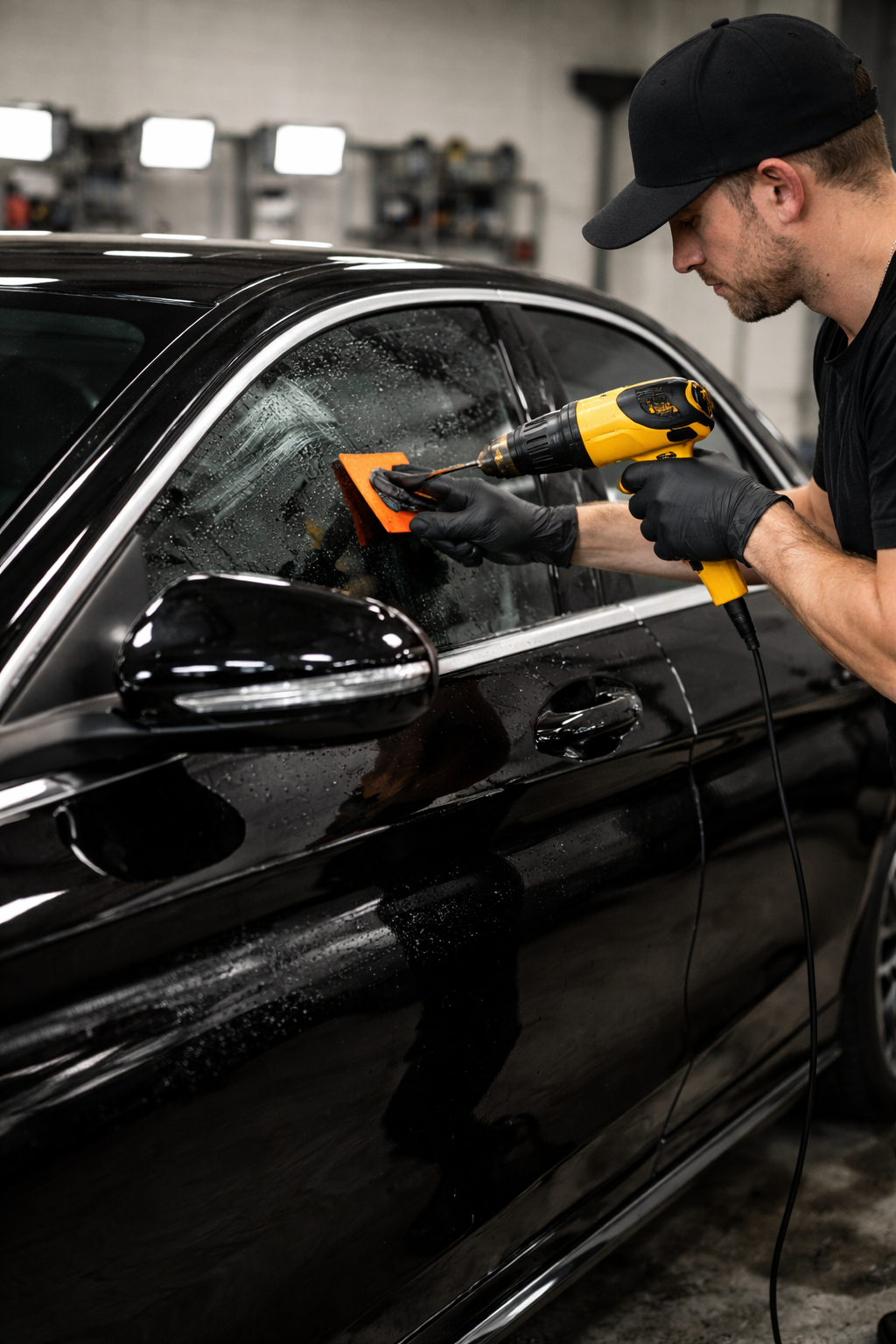
No matter which of the types of car window tint you choose, professional installation plays a major role in the final outcome. The installation process involves thoroughly cleaning the window and applying the film to the interior surface of the glass. A heat gun is often used to shrink and mold the film to the curvature of the window for a smooth finish. While DIY window tinting kits are available, achieving a professional-quality finish can be challenging for inexperienced installers. Common installation issues include trapped dust, misaligned edges, or improper curing that leads to peeling.
Once applied, window tint requires minimal care—cleaning should be done with ammonia-free solutions and soft cloths to maintain the film’s appearance and longevity. Professional installation is recommended to ensure a flawless appearance and compliance with local regulations, as well as to avoid common problems such as bubbling, peeling, creasing, and uneven coverage.
A professional tint installer can also help you compare the different types of car window tint based on your specific vehicle, goals, and budget. That guidance can make it much easier to choose a film that looks great and performs the way you expect.
Doctor Detail in Costa Mesa: Premium Detailing and Window Tinting Services
At Doctor Detail in Costa Mesa, we are committed to helping drivers protect and enhance their vehicles with high-quality automotive care. We offer a wide range of professional car detailing services designed to keep your vehicle looking its best, from interior and exterior detailing to paint enhancement and other appearance-focused services tailored to your needs. Our team takes pride in delivering careful workmanship, personalized service, and results that reflect the level of care your vehicle deserves.
In addition to full-service detailing, Doctor Detail proudly offers professional auto window tinting services and yacht window tinting services for customers who want greater comfort, UV protection, privacy, and style. Whether you are looking to upgrade your daily driver or improve the performance and appearance of your yacht’s glass surfaces, our team can help you choose the right tint solution for your needs. With multiple tint options available, we make it easy to find the right fit based on performance goals, aesthetics, and budget.
Ready to Upgrade Your Vehicle? Contact Doctor Detail Today
Choosing among the different types of car window tint is easier when you have the right team guiding you through the options. Whether you are interested in affordable privacy, improved comfort, enhanced UV protection, or premium heat rejection, Doctor Detail in Costa Mesa can help you select the ideal solution for your vehicle. Our experienced team is here to explain the different types of window tint for cars and provide professional recommendations based on your goals, style preferences, and budget.
If you are ready to enhance your car with high-quality window tinting, detailing, or yacht window tinting services, contact Doctor Detail today. We are here to answer your questions, help you compare the best types of window tint for cars, and schedule your appointment for expert service you can trust.