Minor dents and dings can make an otherwise clean vehicle look neglected. Whether the damage came from a shopping cart, a parking lot door swing, or a small hail impact, many drivers want a repair option that restores the vehicle without unnecessary sanding, fillers, or repainting. That is where paintless dent repair(PDR) comes in.
In this guide, we will explain what paintless dent repair is, how does paintless dent repair work, when it is the right solution, and why it has become one of the most effective methods for removing minor car dents. If you are looking for a practical, cost-effective way to improve your vehicle’s appearance while preserving its original finish, this process is worth understanding. Paintless dent repair delivers lasting results that restore your car or truck to its pre-damage condition.
What Is Paintless Dent Repair?
Paintless dent repair is a specialized dent removal technique used to fix minor dents, creases, and dings without disturbing the vehicle’s original paint. This specialized technique requires skilled technicians to do the job properly, as it involves more than just simple tools or DIY methods. Instead of filling the damaged area, sanding it down, and repainting the panel, a skilled technician carefully massages the metal back into its original shape using precision tools and controlled pressure.
The goal of paintless dent repair is to restore the panel while keeping the factory finish intact. Because the original paint remains untouched, this method is often preferred for cosmetic damage where the paint surface has not been cracked, chipped, or severely stretched.
This repair method is commonly used for:
- Door dings
- Small to medium-sized dents
- Minor body creases
- Hail damage
- Soft dents caused by low-impact contact
- Minor dings
Paintless dent removal is a quick, cost-effective, and permanent method for repairing minor dents and hail damage, preserving the vehicle’s original paint and finish. Once a dent is properly removed using paintless dent repair, it won’t resurface again. Paintless dent repair is particularly effective on newer vehicles due to their modernized paint systems, and it can be used on both aluminum and steel panels.
For many vehicle owners, paintless dent repair offers a cleaner and more efficient alternative to conventional body repair.
Benefits of Paintless Dent Repair for Cars
There is a reason more car owners ask about paintless dent repair when they notice minor body damage. It offers several advantages over traditional dent repair methods.
Preserves the Original Paint
One of the biggest benefits of paintless dent repair is that it keeps the factory paint finish in place. Original paint usually matches better, lasts longer, and helps preserve the vehicle’s overall appearance and value.
Faster Than Traditional Repairs
Because there is no need for body filler, sanding, priming, or repainting, the repair process is often much quicker. Repairs using paintless dent repair can typically be completed in a few hours, eliminating the need for waiting for paint layers to dry, and are significantly faster than traditional auto body work.
In many cases, minor dents can be corrected far faster than with a conventional body shop process.
Cost-Effective for Minor Damage
Since fewer materials and fewer repair stages are involved, paintless dent repair can often be a more affordable solution for eligible dents. The cost of paintless dent repair depends on several factors, including the dent’s location, size, and depth.
A small dent or door ding will typically cost $165. The depth and complexity of the dent, as well as the need for specialized techniques or additional time on certain panels, can significantly influence the overall cost.
Environmentally Friendly
Traditional body repairs often involve paint products, solvents, and fillers. Paintless dent repair reduces the need for those materials, making it a more environmentally conscious option.
Helps Maintain Vehicle Value
Preserving the original finish can be important for resale value. Buyers often appreciate repairs that do not involve repainting, especially when the work restores the vehicle cleanly and professionally.
How Does Paintless Dent Repair Work?
A common question drivers ask is, how does paintless dent repair work when no sanding or repainting is involved. The answer lies in a careful, highly controlled process that focuses on restoring the metal panel rather than covering the damage.
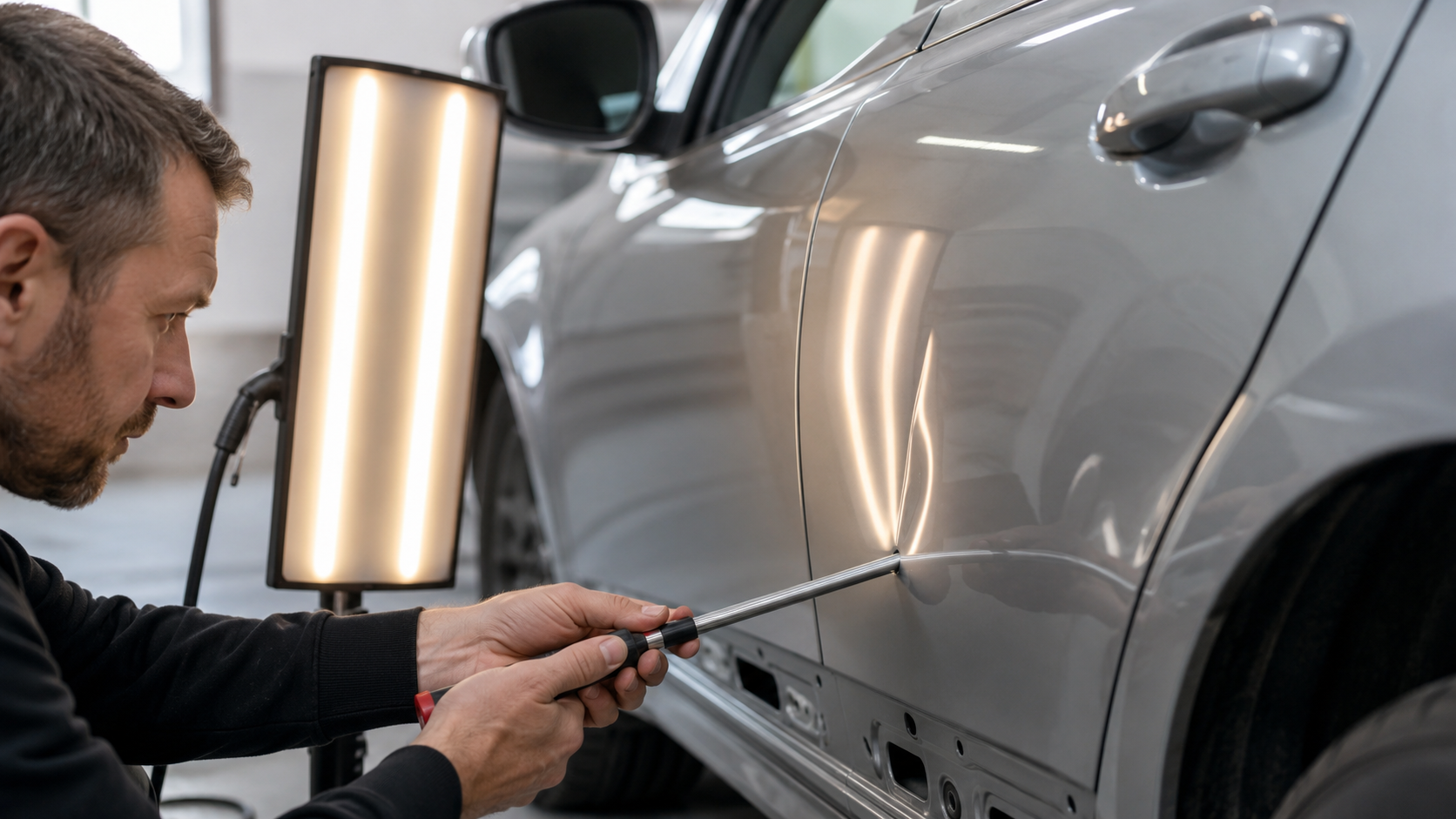
During paintless dent repair, a trained tech uses specialized tools to access the backside of the dent whenever possible. The tech may need to disassemble certain components of the vehicle to access the damaged area and repair dents effectively. By applying steady pressure in precise locations, the technician gradually massages the dent outward until the panel regains its proper shape.
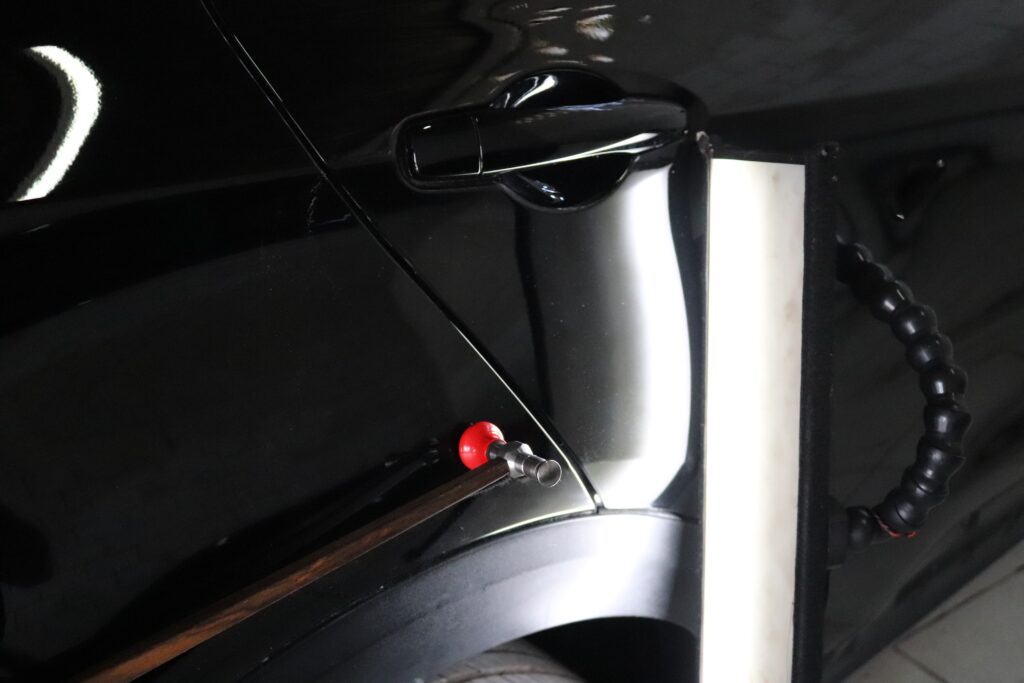
The most common techniques in paintless dent repair utilize metal rods and body picks to push out the dents from the underside of the body panel. In some situations, technicians may also use specialized glue-pulling methods from the exterior to lift the dent safely. Fine tuning the repair often involves tapping down the repair to remove small high spots.
This process requires patience, technical skill, and a strong understanding of how automotive metal reacts to pressure. Professionals have access to a wider range of tools and techniques that can make the repair process quicker and more effective. It is not a quick push-and-pop fix. Instead, it is a detailed repair method designed to restore the panel while protecting the paint surface.
How Does Paintless Dent Repair Work Step by Step?
If you have been wondering, how does paintless dent repair work in practical terms, it helps to break the process down into stages. Sometimes, the process may require disassembling and reassembling certain components of the vehicle to access the dent area. It is important to handle these components carefully to ensure a successful repair.
1. Damage Assessment
The repair begins with a close inspection of the dent. A tech (technician) evaluates the size, depth, location, and condition of the paint to determine if paintless dent repair is feasible. This step determines whether paintless dent repair is the right solution.
In general, a dent may be a good candidate if:
- The paint is still intact
- The dent is shallow or moderate in depth
- The metal has not been sharply stretched
- The damage is not located in an area with severe structural distortion
2. Accessing the Dent
Once the dent is approved for repair, the technician identifies the best way to reach it. This may involve removing trim panels, accessing the back of a door or fender, or selecting an exterior pulling technique if rear access is limited. In many cases, this process requires carefully removing and later reassembling vehicle components to reach the dent area.
Access matters because the quality of the repair depends on the ability to control pressure accurately and safely.
3. Precision Metal Manipulation
Paintless dent repair is a specialized technique. This is the core of paintless dent repair. Using rods, picks, body tools, and specialized lighting, the technician gently moves the metal back into place in tiny increments. The most common techniques utilize metal rods and body picks to push out the dents from the underside of the body panel.
Reflection boards or LED lights help reveal the exact contour of the dent so adjustments can be made with precision. Fine tuning the repair often involves tapping down the repair to remove small high spots.
4. Fine-Tuning the Surface
After the main dent has been lifted, the panel is refined to remove high spots and restore a smooth finish. This stage is important because even a slight imperfection can remain visible if the panel is not blended correctly.
5. Final Inspection
The final step is a careful review of the repaired area from multiple angles and under different lighting conditions. The goal is to ensure the dent has been removed cleanly and that the panel appearance is as uniform as possible.
Why Paintless Dent Repair Is So Effective for Minor Car Dents
One of the biggest reasons vehicle owners choose paintless dent repair is because it treats the damage directly without unnecessary bodywork. Traditional dent repair often involves sanding the area, applying filler, priming, and repainting. While that process is sometimes necessary, it can be more time-consuming and costly for small dents.
By comparison, paintless dent repair offers several benefits:
- Preserves the original factory paint
- Reduces the need for fillers and repainting
- Often shortens repair time
- Can be more cost-effective for minor damage
- Helps maintain the vehicle’s original appearance
- Supports better resale value by keeping more original materials intact
Paintless dent repair is not only effective for minor dents, but also works well for minor dings and shallow dents. Once a dent is properly removed using paintless dent repair, it won’t resurface again, preserving the factory paint finish.
For many minor dents, this makes paintless dent repair one of the smartest restoration options available.
When Is Paintless Dent Repair the Best Option?
Not every dent can be corrected with this method, but many can. Paintless dent repair is often the best option when the damage is relatively minor and the painted surface has not been broken. While PDR is suitable for small to medium dents, large dents typically require traditional repair methods due to their size and severity. Paintless dent repair is also particularly effective on newer vehicles due to their modernized paint systems.
It tends to work best for:
- Small to medium dents
- Shallow creases
- Parking lot dings
- Hail-related damage
- Panels where the paint remains flexible and unbroken
The location of the dent also matters. Flat or gently curved panels are often easier to repair than edges, reinforced sections, or sharply contoured body lines. However, a skilled technician can often repair more complex dents than many vehicle owners expect.
When Paintless Dent Repair May Not Be Enough
Although paintless dent repair is highly effective, it is not the right solution for every situation. If the paint is chipped, cracked, or severely damaged, traditional refinishing may still be needed. The same is true when the metal has been heavily stretched or the damage affects a structural area.
In those cases, a more complete paint and body refinishing process may be necessary to restore the vehicle properly. That is why an experienced inspection is so important. The right repair method depends on the specific damage, not just the size of the dent.
Doctor Detail in Costa Mesa: Detailing and Refinishing Services You Can Trust
At Doctor Detail in Costa Mesa, we understand that vehicle appearance is about more than just one dent or one surface issue. Drivers want their cars to look clean, well-maintained, and professionally cared for inside and out. That is why we offer a wide range of car detailing services designed to help restore, protect, and enhance your vehicle’s overall condition.
In addition to our detailing services, we also promote our complete paint and body refinishing services, including paintless dent repair for eligible minor dents. Whether your vehicle needs cosmetic dent removal, surface correction, or broader refinishing support, our team is here to help you explore the right solution for your vehicle’s needs. By combining detailing expertise with paint and body refinishing services, we offer a more complete approach to automotive appearance care.

Restore Your Vehicle’s Appearance With Expert Paintless Dent Repair
Now that you know what paintless dent repair is and how does paintless dent repair work, it is easier to see why this method has become such a trusted solution for minor car dents. It offers a less invasive approach, helps preserve factory paint, and can restore your vehicle’s appearance without the need for more extensive bodywork when the damage is a good fit for the process.
If your vehicle has minor dents, dings, or surface damage, contact Doctor Detail today to learn more about our services or to schedule an appointment. Our team is here to help with professional detailing, complete paint and body refinishing, and paintless dent repair solutions tailored to your vehicle’s needs.