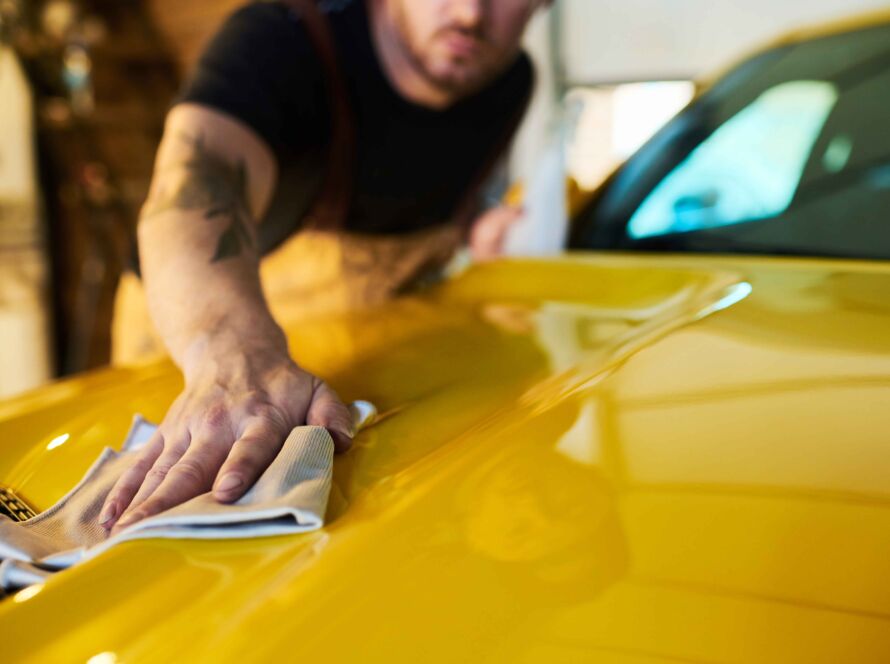
Sports cars are built to turn heads. From deep gloss paint and sculpted body panels to performance wheels, carbon fiber accents, and premium interiors, every detail matters. But because many sports cars have delicate finishes, low ground clearance, tight body gaps, soft paint, and high-end materials, they require a more careful approach than a standard wash.
If you want to learn how to detail a sports car properly, the goal is not just to make it shine. The goal is to clean, protect, and preserve the vehicle without creating swirl marks, scratches, water spots, trim staining, or paint damage. Whether you own a Ferrari, Porsche, Lamborghini, BMW M model, Mercedes-AMG, Corvette, McLaren, or another performance vehicle, the right process makes all the difference.
This professional guide explains how to detail a car safely, with special attention to the techniques, tools, and products that help protect sports car paint and finishes.
Why Sports Cars Require a More Careful Detailing Process
Sports cars often have paint, trim, wheels, and interior materials that demand precision. A rushed wash or improper detailing method can leave behind visible defects, especially under direct sunlight or showroom lighting.
Common risks include:
- Swirl marks from dirty towels, brushes, or poor wash technique
- Scratches from dragging contamination across the paint
- Water spots from improper drying or mineral-heavy water
- Chemical staining on carbon fiber, matte trim, wheels, or badges
- Leather damage from harsh cleaners
- Paint marring caused by incorrect polishing methods
Because sports cars are often lower to the ground and designed with complex curves, vents, spoilers, splitters, and wide wheels, they also collect brake dust, road film, and grime in hard-to-reach areas. A proper detail should address these areas carefully without using aggressive methods that compromise the finish.
Step 1: Inspect the Vehicle Before You Begin
Before any water, soap, or towel touches the car, inspect the vehicle in good lighting. This helps you identify problem areas and choose the safest cleaning method.
Look for:
- Existing swirl marks or scratches
- Rock chips and exposed paint
- Heavy brake dust on wheels
- Bug splatter or tar near the front bumper and lower panels
- Water spots on glass or paint
- Delicate trim, decals, carbon fiber, or matte finishes
- Loose badges, clear bra edges, or paint protection film seams
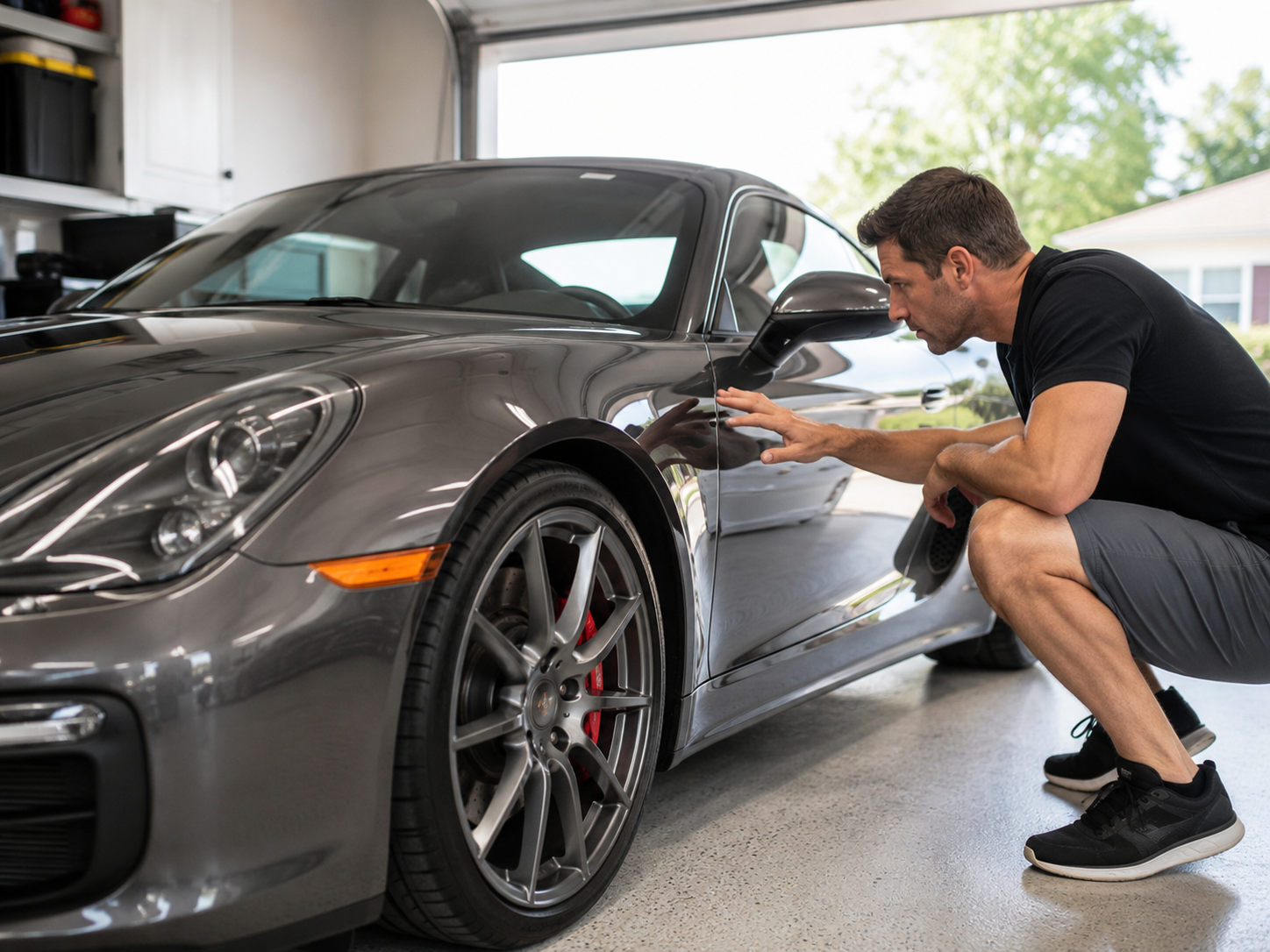
This step is especially important when learning how to detail a sports car because high-performance vehicles often have specialty finishes. Matte paint, satin wraps, ceramic coatings, and paint protection film all require different care than traditional gloss paint.
Step 2: Start With the Wheels, Tires, and Brake Areas
Always clean the wheels and tires before washing the paint. Sports cars often produce heavy brake dust, especially if they have performance brakes. That dust can be abrasive, and you do not want it splashing onto freshly cleaned paint.
Use a dedicated wheel cleaner that is safe for the wheel finish. Avoid acidic or overly harsh products unless you are experienced and know the wheel can tolerate them.
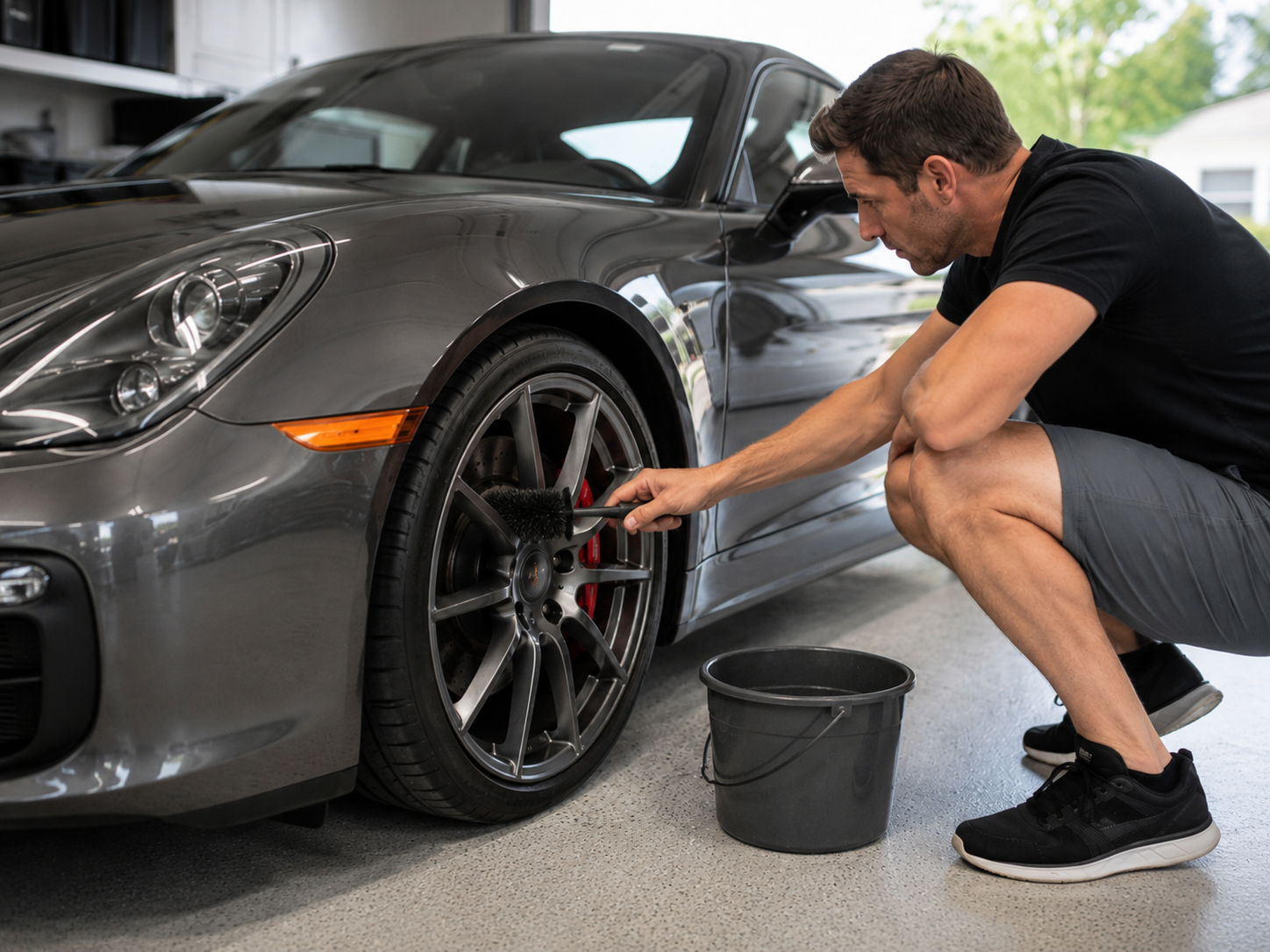
Professional tips:
- Use separate brushes and towels for wheels only.
- Clean one wheel at a time so chemicals do not dry on the surface.
- Use soft wheel brushes for barrels, lug nuts, calipers, and tight spokes.
- Rinse thoroughly around brake calipers and behind the wheels.
- Avoid spraying harsh chemicals on hot wheels or brakes.
For carbon ceramic brakes, use extra caution. These systems can be sensitive, and aggressive chemicals should be avoided. When in doubt, use a pH-balanced cleaner and gentle agitation.
Step 3: Pre-Rinse and Pre-Foam the Exterior
One of the most important rules in how to detail a car without scratching it is simple: remove as much loose dirt as possible before touching the paint.
Begin with a thorough rinse to remove dust, grit, and loose debris. Pay special attention to:
- Front bumper and grille openings
- Side skirts and rocker panels
- Rear diffuser areas
- Wheel arches
- Door jambs
- Mirror caps
- Spoilers and vents
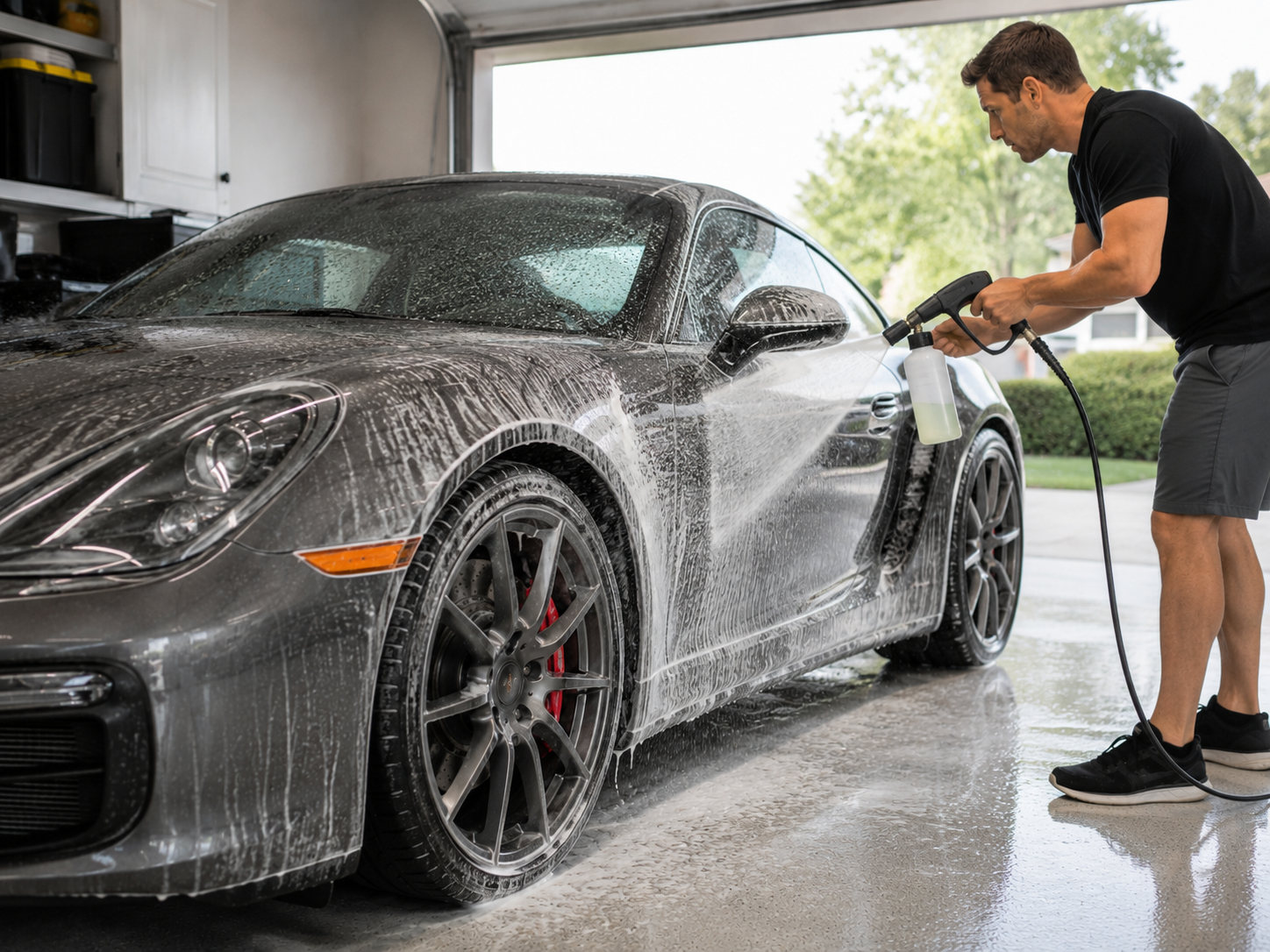
After rinsing, apply a quality foam wash using a foam cannon or foam sprayer. Let the foam dwell for a few minutes, but do not allow it to dry. This helps loosen road film and dirt before the contact wash.
Step 4: Use the Two-Bucket Wash Method
The two-bucket method remains one of the safest ways to wash a sports car by hand. One bucket contains clean soapy water, and the other contains rinse water. Ideally, both buckets should have grit guards.
Here is the basic process:
- Dip a clean microfiber wash mitt into the soap bucket.
- Wash one small section using light, straight-line motions.
- Rinse the mitt in the rinse bucket to release dirt.
- Reload the mitt with clean soap.
- Continue section by section from top to bottom.
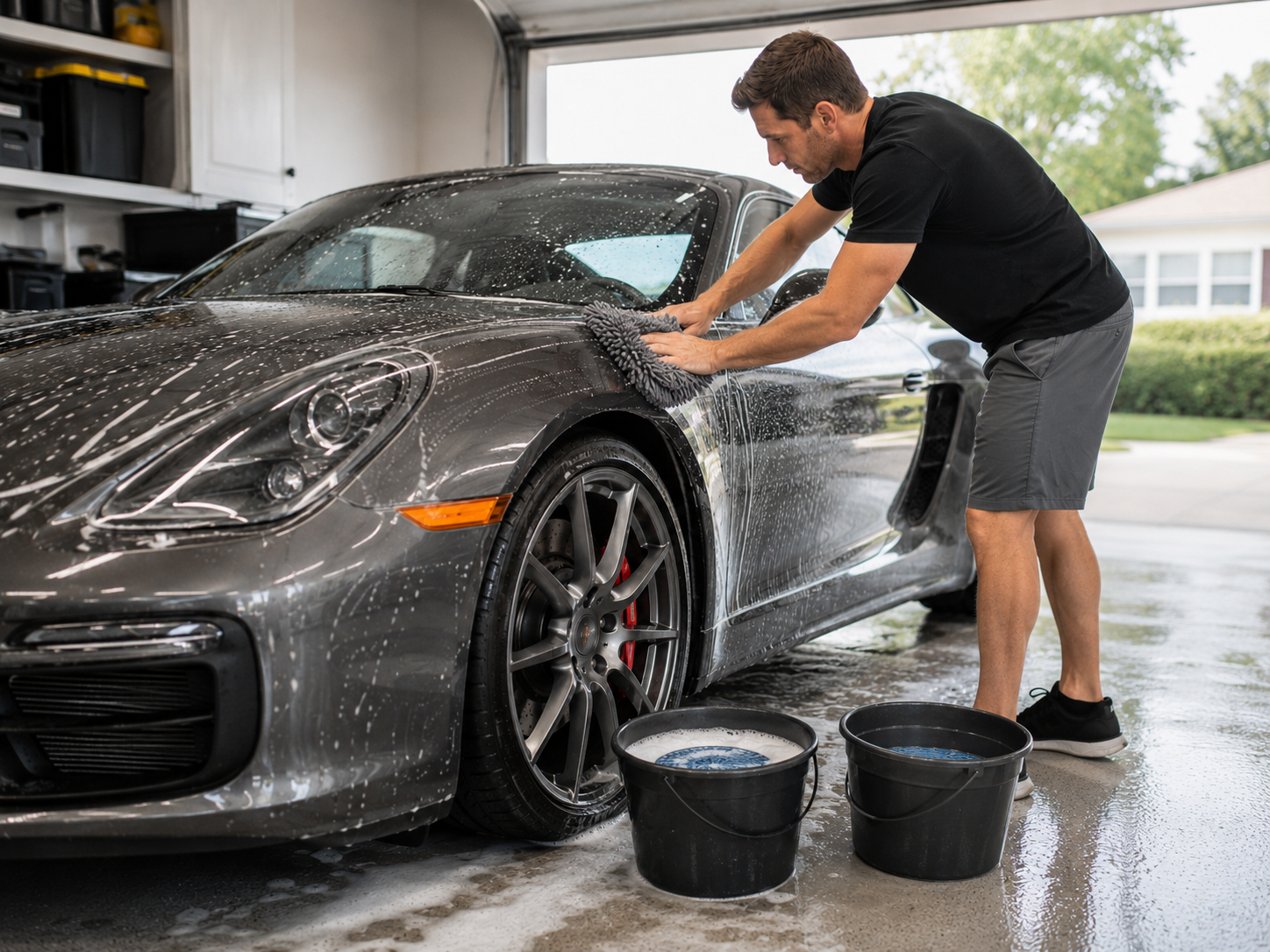
Work from the cleanest areas to the dirtiest areas. Start with the roof, glass, hood, and upper panels, then move to the doors, bumpers, side skirts, and rear sections.
Avoid circular scrubbing. Swirl marks are often caused by dragging dirt in circular patterns across the paint. Use gentle, straight passes and let the soap do the work.
Step 5: Clean Tight Areas Carefully
Sports cars often have detailed design features that collect dirt. These areas need attention, but they should never be attacked with stiff brushes or excessive pressure.
Use soft detailing brushes and microfiber tools for:
- Emblems and badges
- Grille openings
- Fuel doors
- Exhaust tips
- Door handles
- Mirror edges
- Air vents
- Spoiler seams
- Paint protection film edges
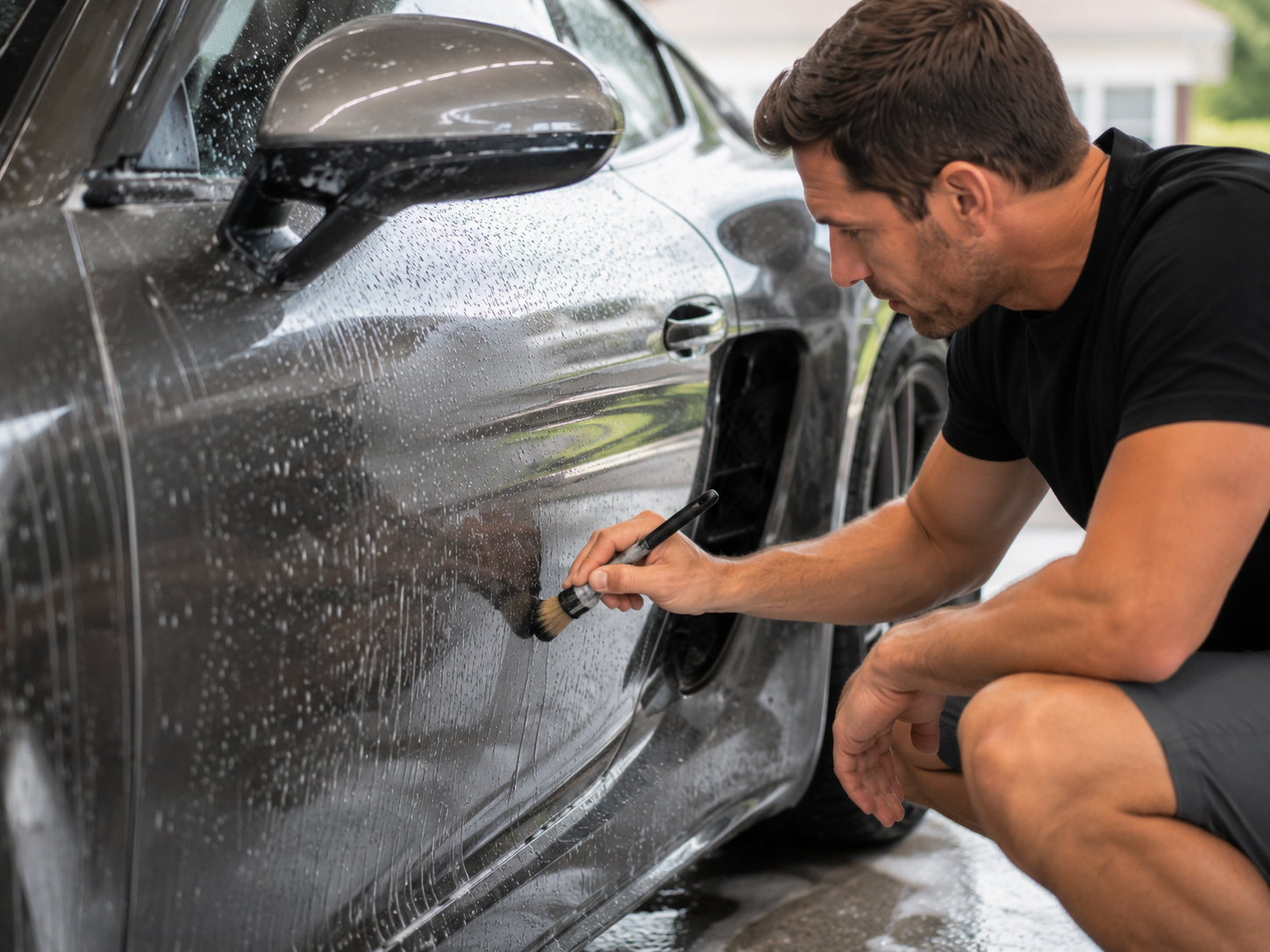
Be especially careful around clear bra or paint protection film edges. Aggressive brushing can lift edges or trap residue along the film line.
Step 6: Rinse Thoroughly and Dry Without Creating Swirls
Drying is one of the most common stages where paint damage occurs. A regular bath towel or old shop rag can easily create scratches. Instead, use clean, plush microfiber drying towels or filtered warm air from a car dryer.
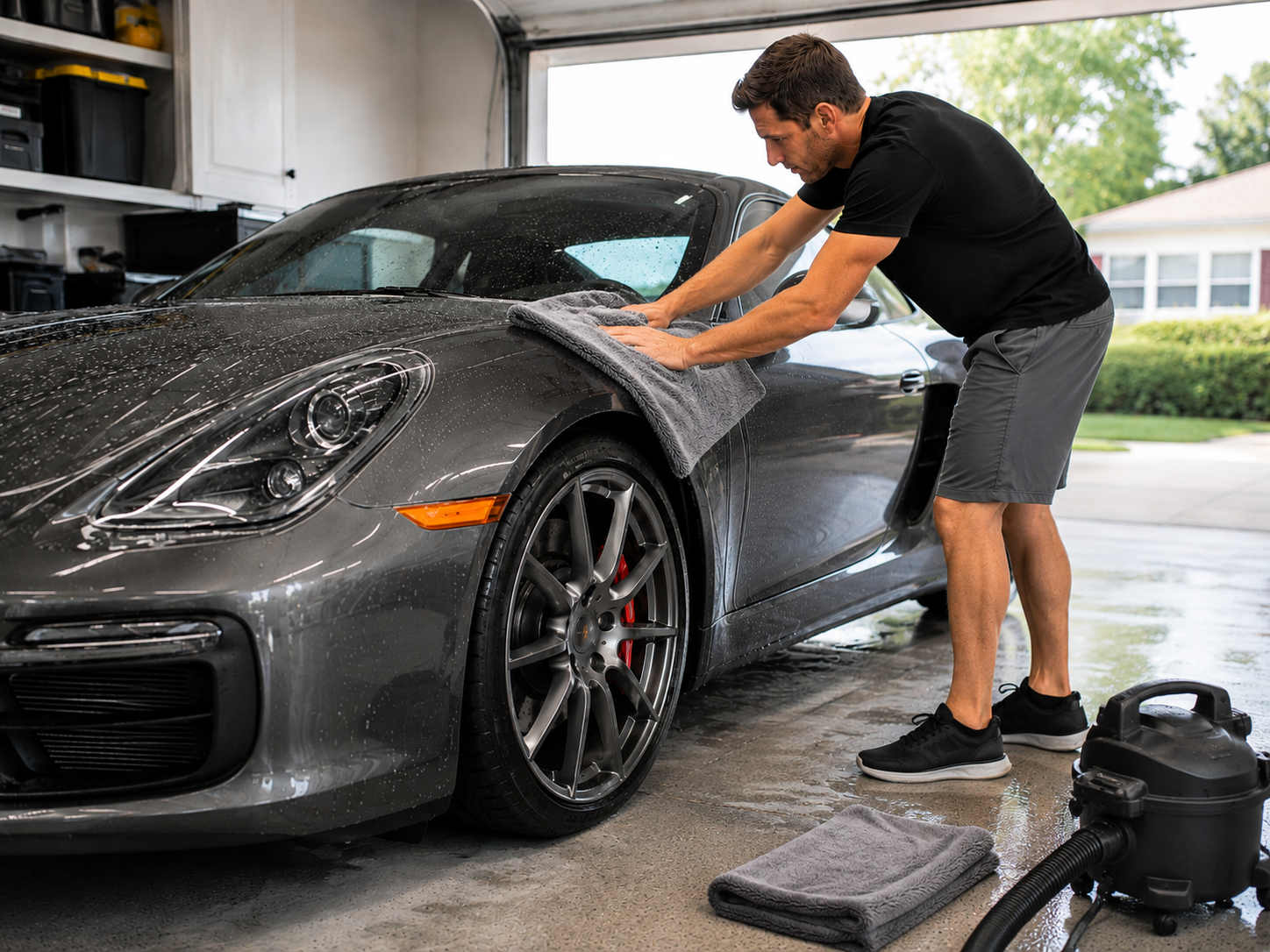
Professional drying tips:
- Rinse thoroughly before drying.
- Use a high-quality microfiber drying towel.
- Blot or gently glide the towel across the surface.
- Use a drying aid or detail spray for added lubrication.
- Blow water out of mirrors, badges, grilles, and panel gaps.
- Never let water sit and dry on the paint.
Sports cars with complex bodywork often hold water in vents, mirrors, spoilers, and trim seams. Blow these areas out carefully to prevent water streaks after the car is parked.
Step 7: Decontaminate the Paint Safely
Even after washing, bonded contaminants may remain on the paint. These can include brake dust, industrial fallout, tar, tree sap, and road grime. Decontamination helps restore smoothness before polishing or protection.
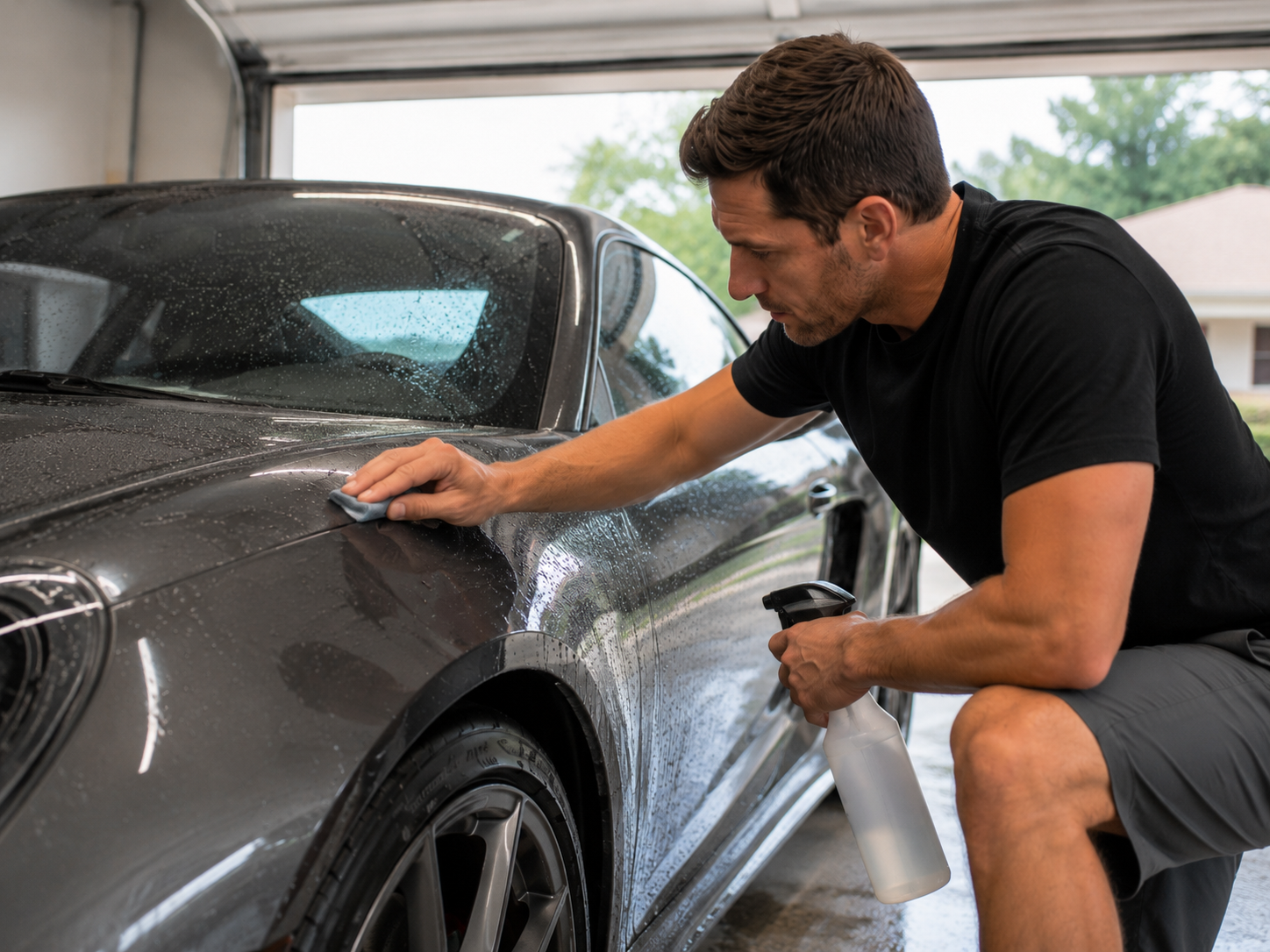
There are two main types of paint decontamination:
Chemical Decontamination
Iron removers and tar removers help dissolve specific contaminants without heavy rubbing. These products should be used carefully and according to directions. Do not let them dry on the surface.
Mechanical Decontamination
Clay bars, clay mitts, or synthetic clay towels can remove bonded contaminants, but they must be used with proper lubrication. Clay can mar soft paint if used too aggressively.
For sports cars, mechanical decontamination should only be done when necessary. If the paint feels rough after washing, clay may be appropriate. If the paint is already smooth, skip it to reduce unnecessary contact.
Step 8: Polish Only When Needed
Polishing can dramatically improve gloss, clarity, and depth, but it also removes a small amount of clear coat. That means it should be done with purpose, not as a routine step every time you detail the car.
A proper paint correction process may remove or reduce:
- Swirl marks
- Fine scratches
- Oxidation
- Water spot etching
- Haze
- Light marring
However, polishing a sports car requires experience. Many exotic and high-performance cars have soft, thin, or sensitive paint systems. Incorrect machine polishing can create holograms, burn edges, or leave uneven results.
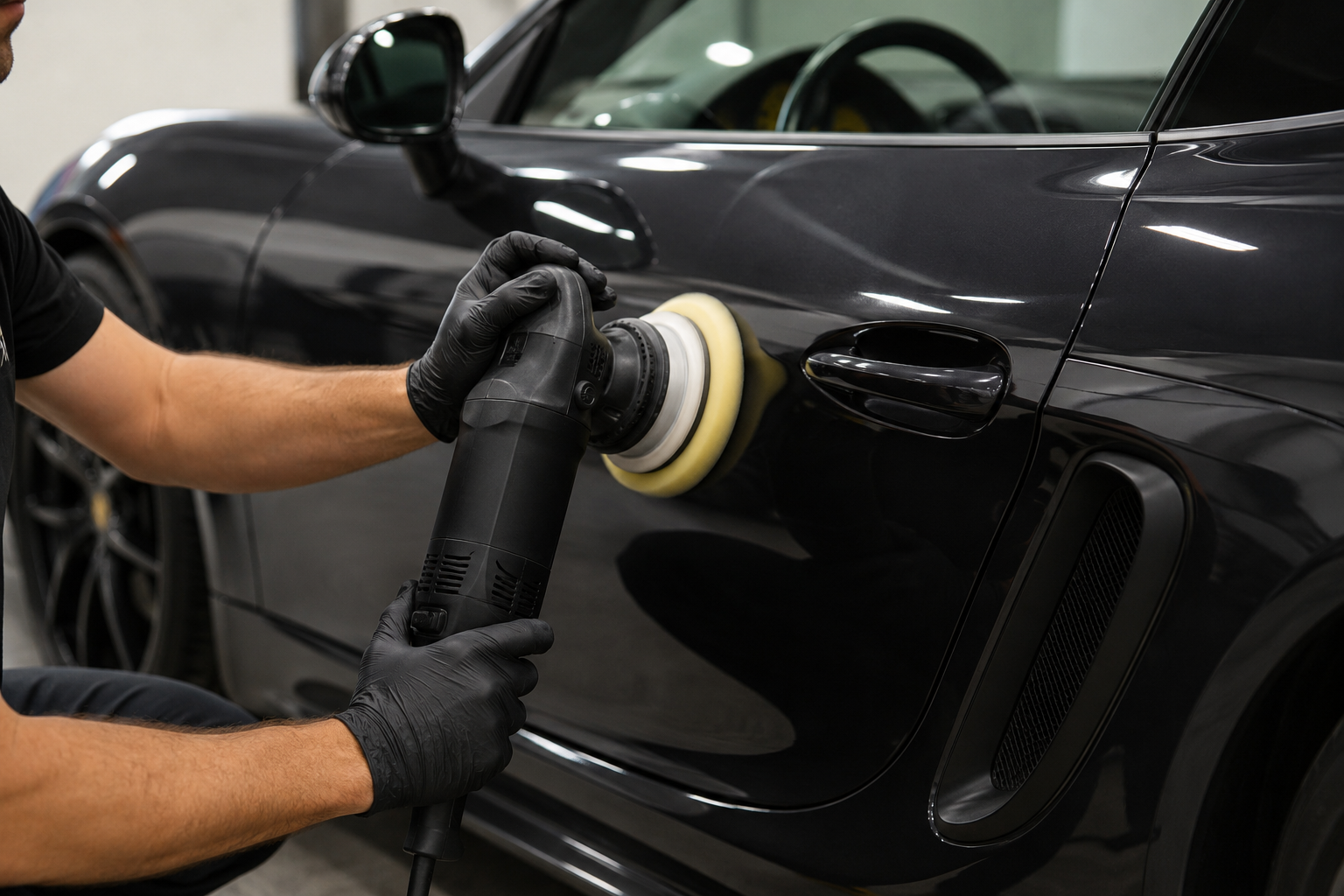
Professional tips:
- Measure paint depth when possible.
- Test polish combinations on a small area first.
- Use the least aggressive method that achieves the desired result.
- Be careful around body lines, edges, and sharp curves.
- Avoid polishing matte paint or matte vinyl.
- Keep pads clean throughout the process.
If you are unsure how aggressive to be, it is safer to consult a professional detailer before attempting correction on a high-value vehicle.
Step 9: Protect the Paint After Detailing
Once the paint is clean and polished, protection helps preserve the finish and makes future washes safer. The best option depends on the vehicle, driving habits, storage conditions, and desired durability.
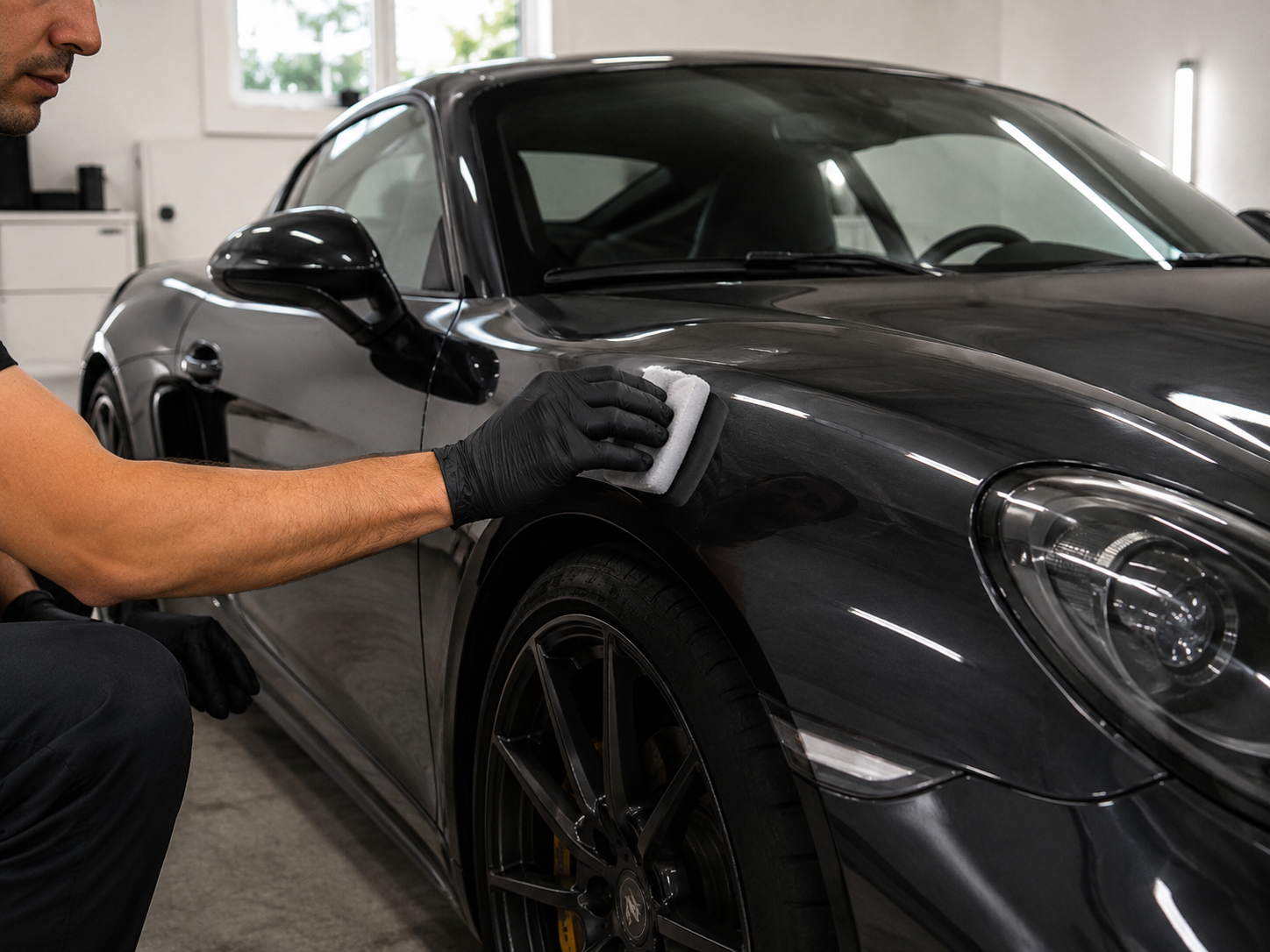
Common paint protection options include:
- Wax: Adds warmth and shine but typically has shorter durability.
- Paint sealant: Offers longer-lasting protection than traditional wax.
- Ceramic coating: Provides strong gloss, slickness, chemical resistance, and easier maintenance.
- Paint protection film: Helps defend against rock chips, road debris, and impact damage.
For sports cars that are frequently driven, ceramic coating and paint protection film can be especially valuable. A ceramic coating helps reduce dirt buildup and makes maintenance easier, while paint protection film is ideal for high-impact areas such as the front bumper, hood, mirrors, rocker panels, and rear wheel arches.
Step 10: Detail the Interior With the Same Level of Care
A proper sports car detail does not stop at the exterior. Interiors often include leather, Alcantara, carbon fiber, piano black trim, suede-like materials, contrast stitching, and delicate screens.
Use interior products designed for the specific material you are cleaning. Avoid greasy dressings, harsh all-purpose cleaners, and excessive moisture.
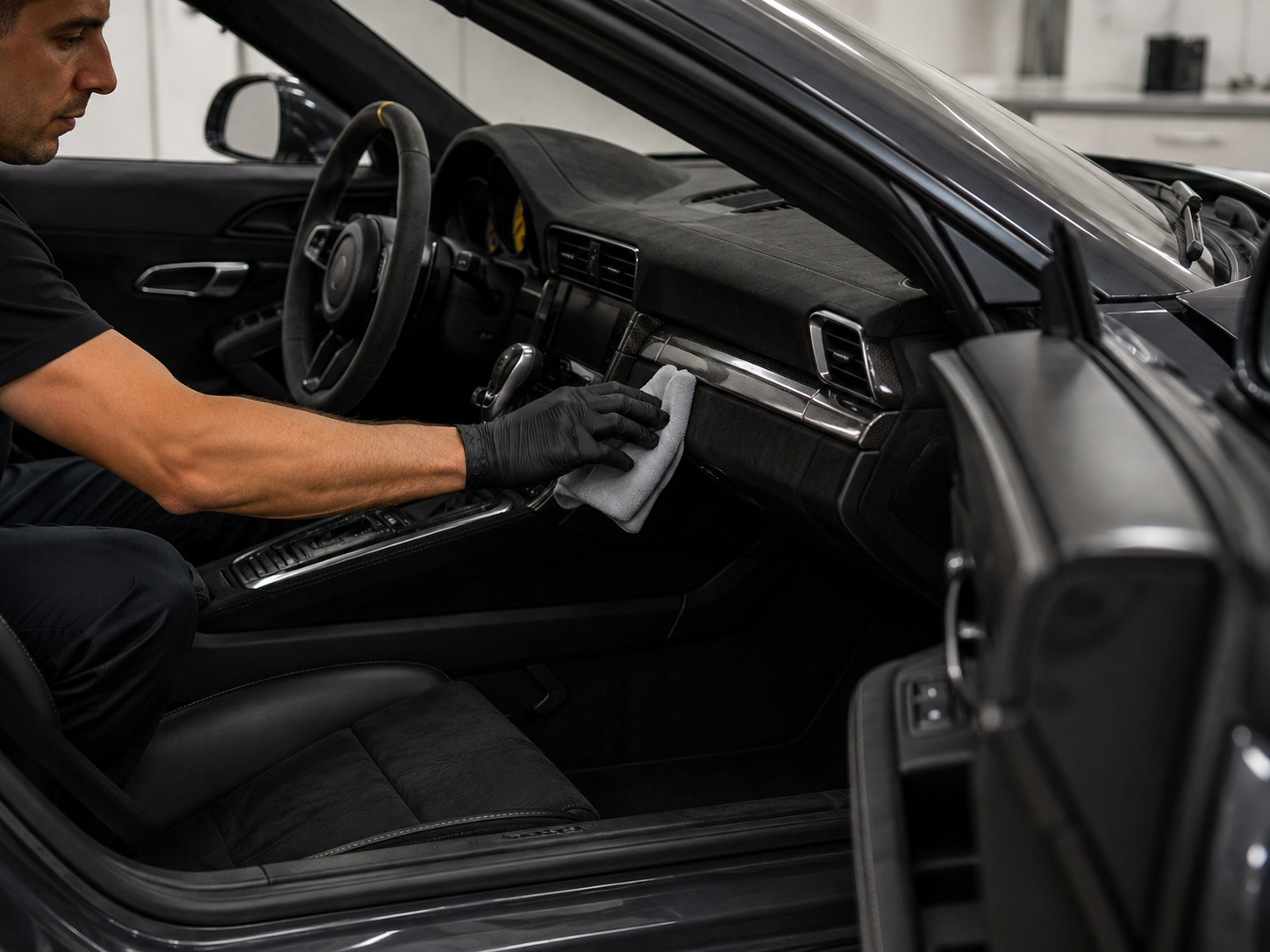
Interior detailing tips:
- Vacuum carefully using soft attachments.
- Use leather-safe cleaners and conditioners where appropriate.
- Clean Alcantara gently with minimal moisture.
- Use soft microfiber towels on screens and piano black trim.
- Avoid oversaturating buttons, seams, and electronics.
- Clean pedals, seat bolsters, steering wheels, and shift areas thoroughly.
Sports car interiors often show wear on seat bolsters, steering wheels, and entry points. Gentle, regular cleaning helps preserve these high-contact areas.
Common Mistakes to Avoid When Learning How to Detail a Sports Car
Even well-intentioned owners can damage paint by using the wrong methods. Avoid these common mistakes:
- Washing the car in direct sunlight
- Using dish soap or harsh household cleaners
- Reusing dirty towels
- Using one towel for wheels and paint
- Scrubbing bug splatter aggressively
- Letting soap or chemicals dry on the surface
- Skipping lubrication when using clay
- Using automatic car washes with brushes
- Applying tire dressing too heavily
- Polishing without proper experience
- Drying with old towels, chamois, or low-quality microfiber
The safest approach is always controlled, gentle, and methodical. When in doubt, use more lubrication, cleaner towels, and less pressure.
How Often Should You Detail a Sports Car?
The right schedule depends on how often the vehicle is driven and where it is stored. A garage-kept weekend car may need less frequent detailing than a daily-driven sports car exposed to sun, dust, rain, and road debris.
A good general schedule is:
- Maintenance wash: Every 1 to 3 weeks, depending on use
- Interior wipe-down: Every 2 to 4 weeks
- Deep interior detail: Every 3 to 6 months
- Paint decontamination: 1 to 2 times per year, or as needed
- Wax or sealant: Every few months, depending on product durability
- Ceramic coating maintenance: As recommended by the installer
If the car is ceramic coated or protected with paint protection film, maintenance becomes easier, but proper washing is still essential.
Professional Sports Car Detailing at Doctor Detail in Costa Mesa
At Doctor Detail in Costa Mesa, we understand that sports cars require more than a basic wash. These vehicles deserve careful, knowledgeable detailing that protects their appearance, finish, and long-term value. Our team provides professional car detailing services for a wide range of sports cars and luxury performance vehicles, including Ferraris, Porsches, Lamborghinis, BMWs, Mercedes-Benz models, and more.
Whether your vehicle needs a careful hand wash, paint decontamination, interior detailing, exterior detailing, polishing, protection, or routine maintenance, Doctor Detail offers a wide range of detailing services designed to help your car look its best without unnecessary risk to the paint or delicate materials. We take a professional approach to every vehicle and focus on safe methods, quality products, and attention to detail from start to finish.
Schedule Professional Sports Car Detailing in Costa Mesa With Doctor Detail
Detailing a sports car the right way requires patience, precision, and the right products at every step. From safe washing and careful drying to paint decontamination, polishing, and interior care, each part of the process plays a role in preventing swirls, scratches, and paint damage. When done correctly, professional detailing helps preserve your vehicle’s finish, enhance its gloss, and keep it looking as sharp as it performs.
If you want your Ferrari, Porsche, Lamborghini, BMW, Mercedes, or other performance vehicle cared for by experienced professionals, contact Doctor Detail in Costa Mesa today. Reach out to learn more about our professional car detailing services or schedule an appointment with our team.