

Your vehicle’s paint plays an important role in its overall appearance, helping showcase its color, finish, and distinctive design. However, prolonged sun exposure, environmental contaminants, improper washing techniques, and everyday wear can gradually cause automotive paint to lose its original depth and shine.
Understanding how to restore faded car paint can help you bring back your vehicle’s appearance while protecting its exterior from further deterioration. Whether you own a Ferrari, Porsche, BMW, Mercedes-Benz, or a classic collector car, the right paint restoration techniques can help preserve its beauty, condition, and long-term value.
What Causes Car Paint to Fade?
Before exploring how to restore faded car paint, it is important to understand why automotive finishes lose their original color and gloss. Most modern vehicles have a multi-layer paint system consisting of a primer, base coat, and protective clear coat. When the clear coat deteriorates or becomes contaminated, the underlying paint can appear dull, faded, or discolored.
Several factors contribute to automotive paint fading, including:
- UV Exposure: Prolonged exposure to sunlight can gradually degrade automotive finishes, causing oxidation, discoloration, and loss of gloss.
- Oxidation: Exposure to oxygen, moisture, and environmental conditions can cause paint surfaces to develop a dull, chalky appearance, particularly on older or unprotected finishes.
- Environmental Contaminants: Bird droppings, tree sap, industrial fallout, and road debris can damage automotive clear coats when left untreated.
- Improper Washing Techniques: Harsh cleaning chemicals, abrasive brushes, and automatic car washes can create fine scratches that reduce the paint’s reflective properties.
- Lack of Paint Protection: Vehicles without adequate wax, sealant, or ceramic coating protection may experience accelerated surface deterioration.
- Age and General Wear: Even well-maintained vehicles can develop paint imperfections as protective coatings gradually deteriorate over time.
For luxury and collector vehicles in Orange County, consistent exposure to strong sunlight and coastal environmental conditions can make proper paint maintenance especially important.
How to Tell if Your Car’s Paint Can Be Restored
Not all faded automotive paint requires repainting. In many cases, professional paint correction and polishing can substantially improve the appearance of a vehicle with surface-level oxidation, light scratches, and reduced gloss.
However, determining whether paint can be restored depends on the severity of the damage and the condition of the remaining clear coat.
Signs Your Car Paint Can Be Restored
Paint restoration may be effective if your vehicle exhibits the following characteristics:
- A dull or hazy finish without visible peeling
- Light oxidation affecting the paint’s appearance
- Minor swirl marks or surface scratches
- Reduced gloss despite regular washing
- Surface contamination that makes the paint feel rough
- Faded-looking areas with an otherwise intact clear coat
These conditions can often be improved through professional cleaning, decontamination, polishing, and paint correction.
Signs Your Car May Need Paint Refinishing
More extensive paint damage may require professional refinishing instead of traditional paint correction. Common warning signs include peeling or flaking clear coat, exposed primer, deep scratches, severe discoloration, and areas where the paint has completely deteriorated.
Once the clear coat has failed, polishing cannot permanently restore the missing protective layer. In these situations, professional paint and body refinishing may be necessary to achieve a uniform, long-lasting finish.
How to Restore Faded Car Paint: Step-by-Step Guide
Restoring faded car paint involves more than simply applying wax or polishing the vehicle’s exterior. A proper restoration process addresses surface contamination, evaluates paint condition, corrects imperfections, and applies protection to help preserve the results.
The following steps explain how to restore faded car paint safely and effectively.
Step 1: Thoroughly Wash and Clean the Vehicle
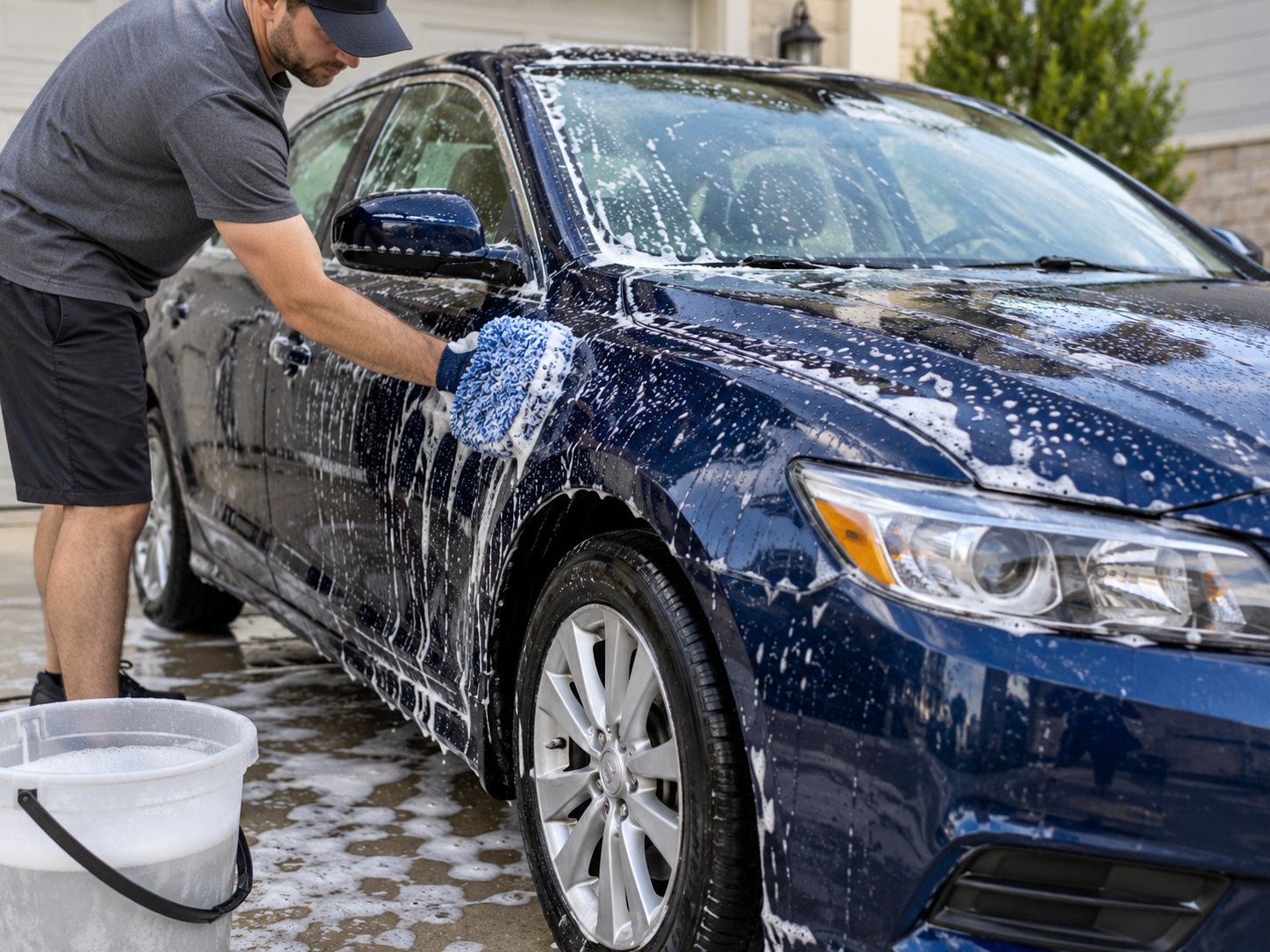
The first step in restoring faded car paint on car surfaces is removing dirt, dust, road grime, and other contaminants. A thorough wash helps expose the true condition of the paint while reducing the risk of scratching the surface during subsequent restoration steps.
Use a pH-neutral automotive shampoo, clean microfiber wash mitts, and appropriate washing techniques to gently remove accumulated debris.
Pay particular attention to areas around trim, body panels, and exterior details where contaminants frequently collect. Once the vehicle is clean, dry it using soft microfiber drying towels or appropriate automotive air-drying equipment.
Avoid using dish soap, household detergents, or aggressive cleaning tools, as these products can strip existing protective treatments or contribute to surface damage.
Step 2: Remove Embedded Surface Contaminants
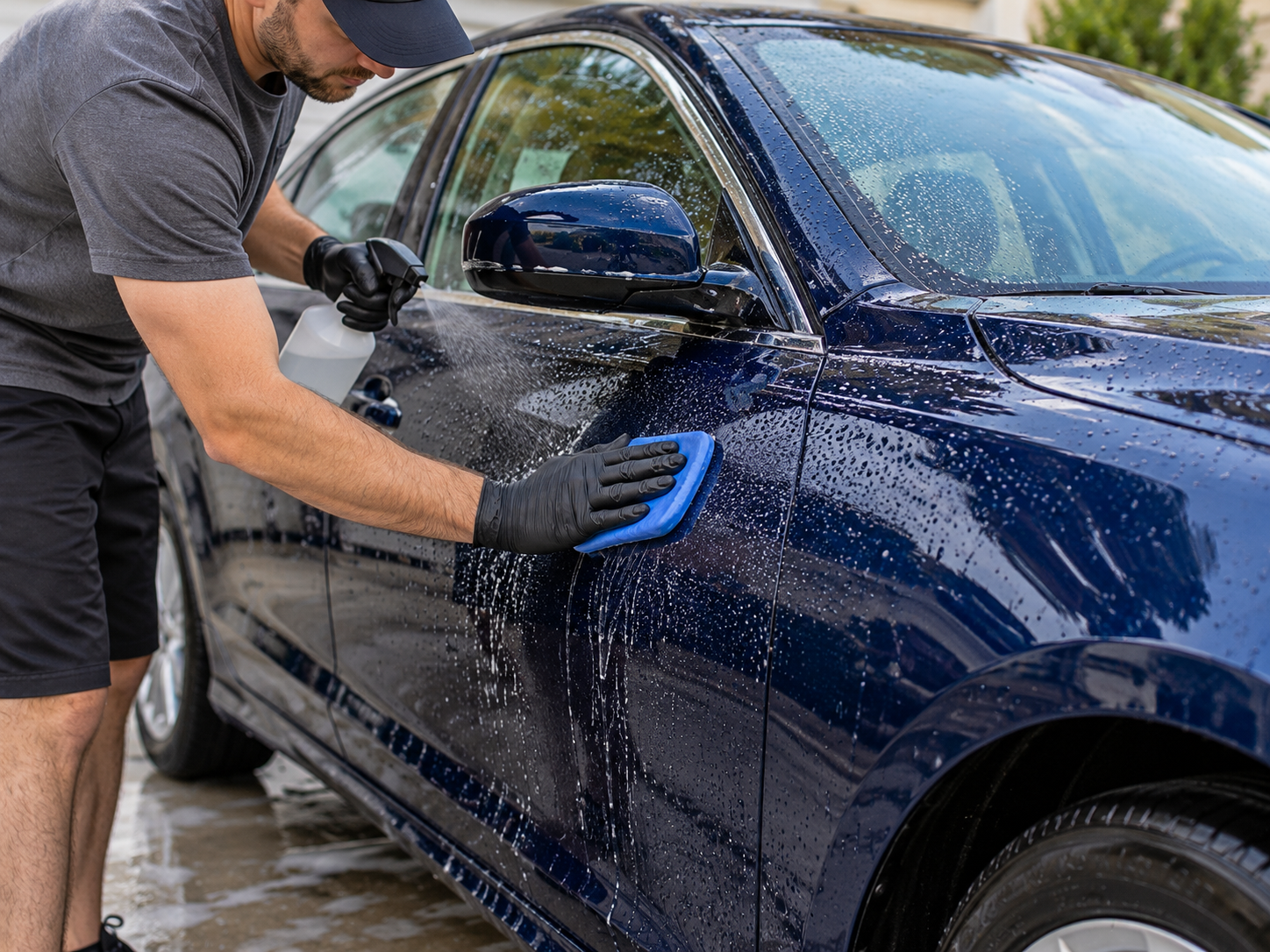
Even after a thorough wash, automotive paint can retain embedded contaminants that affect its smoothness and appearance. These particles may include industrial fallout, road film, mineral deposits, and other environmental debris.
Professional detailers often use specialized chemical decontamination products and automotive clay treatments to remove stubborn contaminants.
Removing these particles helps create a smoother surface and prepares the paint for polishing or correction. Proper lubrication and gentle techniques are essential because aggressive claying can introduce additional scratches or marring.
For high-value luxury vehicles, professional decontamination is particularly beneficial when working with delicate or specialized paint finishes.
Step 3: Assess the Paint Condition and Clear Coat
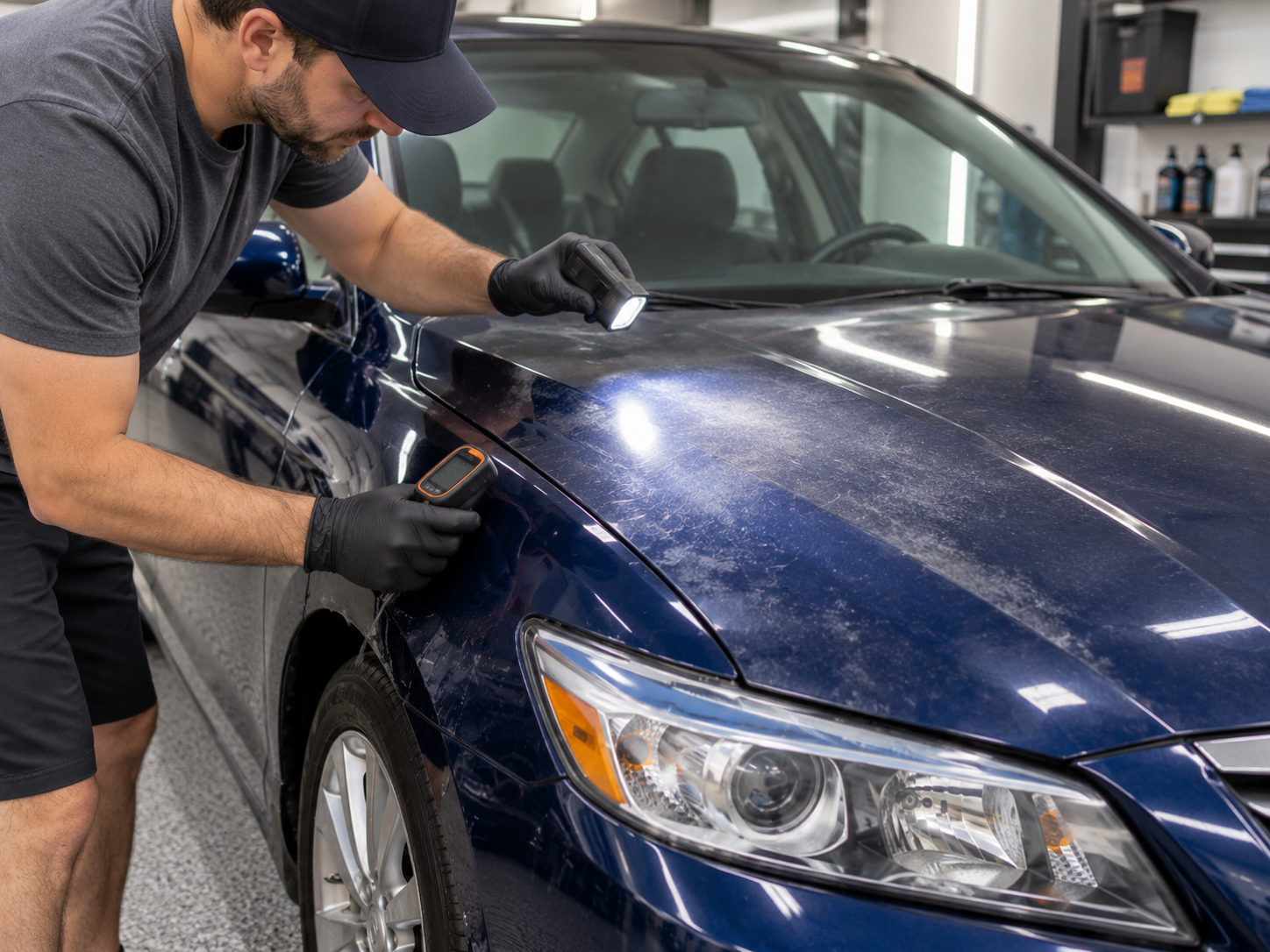
Before attempting paint correction, inspect the vehicle’s finish to determine the severity of fading, oxidation, and surface damage.
A professional paint assessment may involve examining the exterior under specialized lighting and measuring paint thickness where appropriate. These evaluations help identify which areas can safely undergo corrective polishing and which may require more extensive refinishing.
This step is especially important for collector vehicles, older automobiles, and vehicles that have previously undergone body repairs.
Some classic cars feature single-stage paint systems, which require different correction techniques than modern base-coat and clear-coat finishes. Preserving the integrity of the original paint should always take priority over aggressive restoration.
Step 4: Use Paint Correction to Remove Oxidation and Surface Imperfections
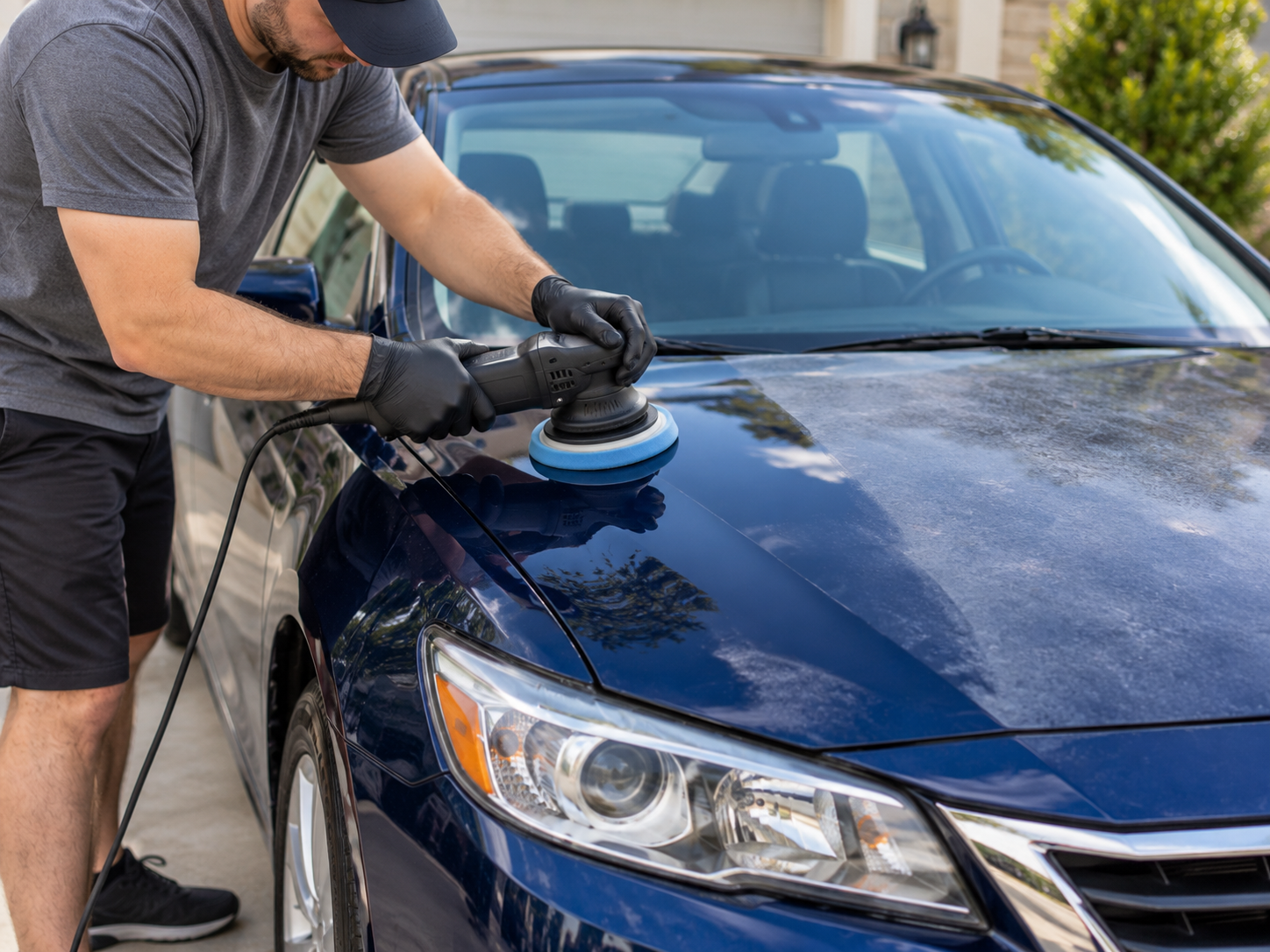
Paint correction is one of the most effective methods for restoring faded car paint when the existing finish remains structurally sound.
This process uses specialized polishing compounds, pads, and machine polishers to carefully remove or refine a small amount of the uppermost paint surface. By correcting oxidation, light scratches, and clear coat imperfections, paint correction can significantly improve gloss and clarity.
Professional paint correction may involve multiple stages:
- Compounding: Uses an appropriate abrasive compound to address heavier oxidation, noticeable scratches, and other correctable surface defects.
- Intermediate Polishing: Refines the corrected surface to reduce remaining imperfections and improve overall clarity.
- Finishing Polish: Enhances gloss, smoothness, and reflection to produce a more uniform appearance.
The necessary level of correction depends on the vehicle’s paint condition, finish type, and available paint thickness.
While some minor imperfections can be addressed through careful hand polishing, professional machine polishing generally provides more consistent results for extensive fading and oxidation.
Step 5: Consider Professional Paint Refinishing for Severe Damage
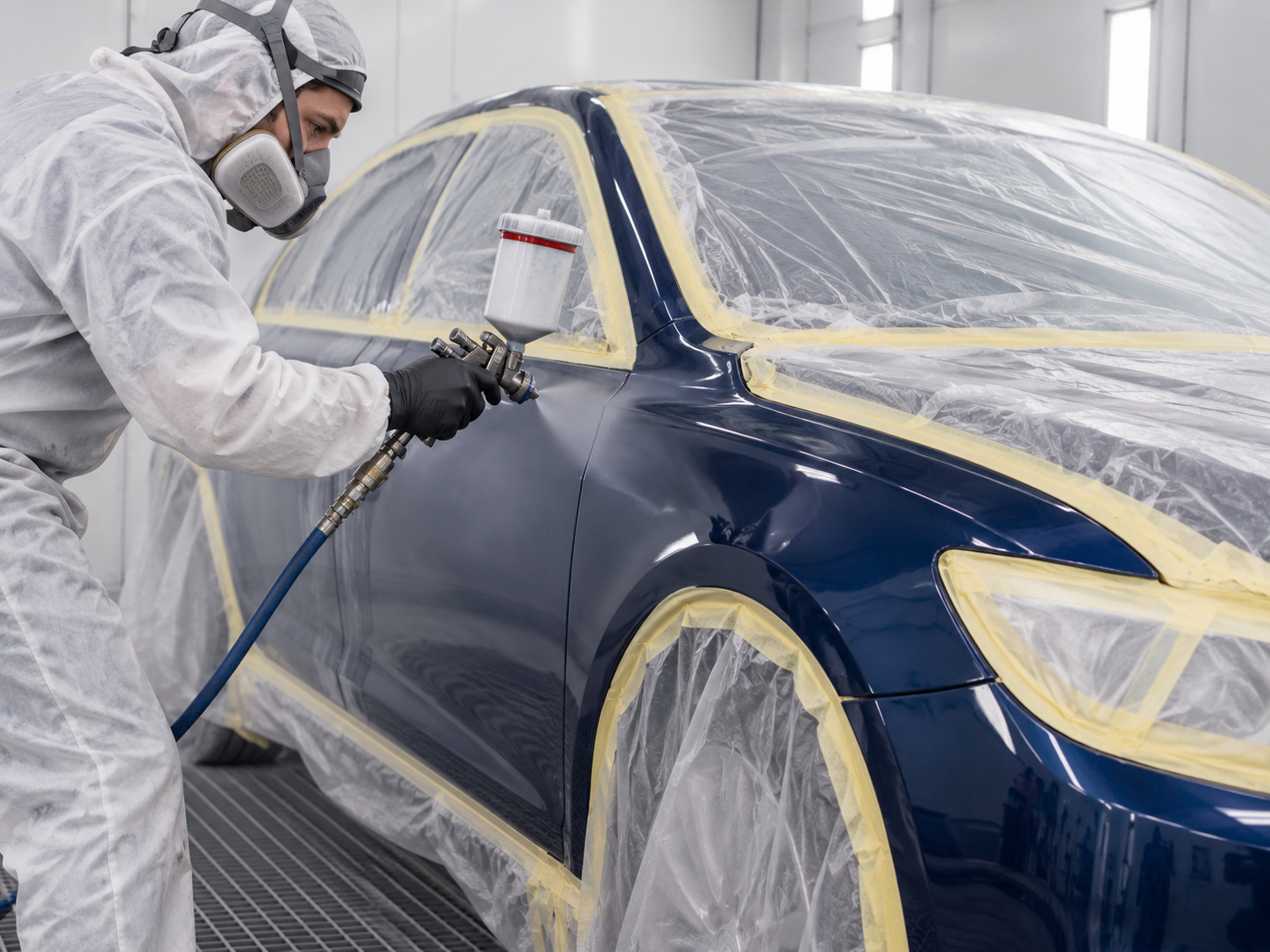
When fading extends beyond surface-level oxidation, traditional polishing may not be sufficient to restore the finish.
Vehicles with failed clear coats, extensive discoloration, or significant paint damage may require localized refinishing or complete panel repainting.
Professional paint refinishing can involve removing damaged coatings, preparing affected surfaces, matching the original paint color, and applying new paint and clear coat where necessary.
For luxury and collector vehicles, accurate color matching and careful refinishing techniques are especially important. The goal is to create a consistent appearance while preserving as much of the existing finish as practical.
Step 6: Apply Paint Protection to Preserve the Restored Finish
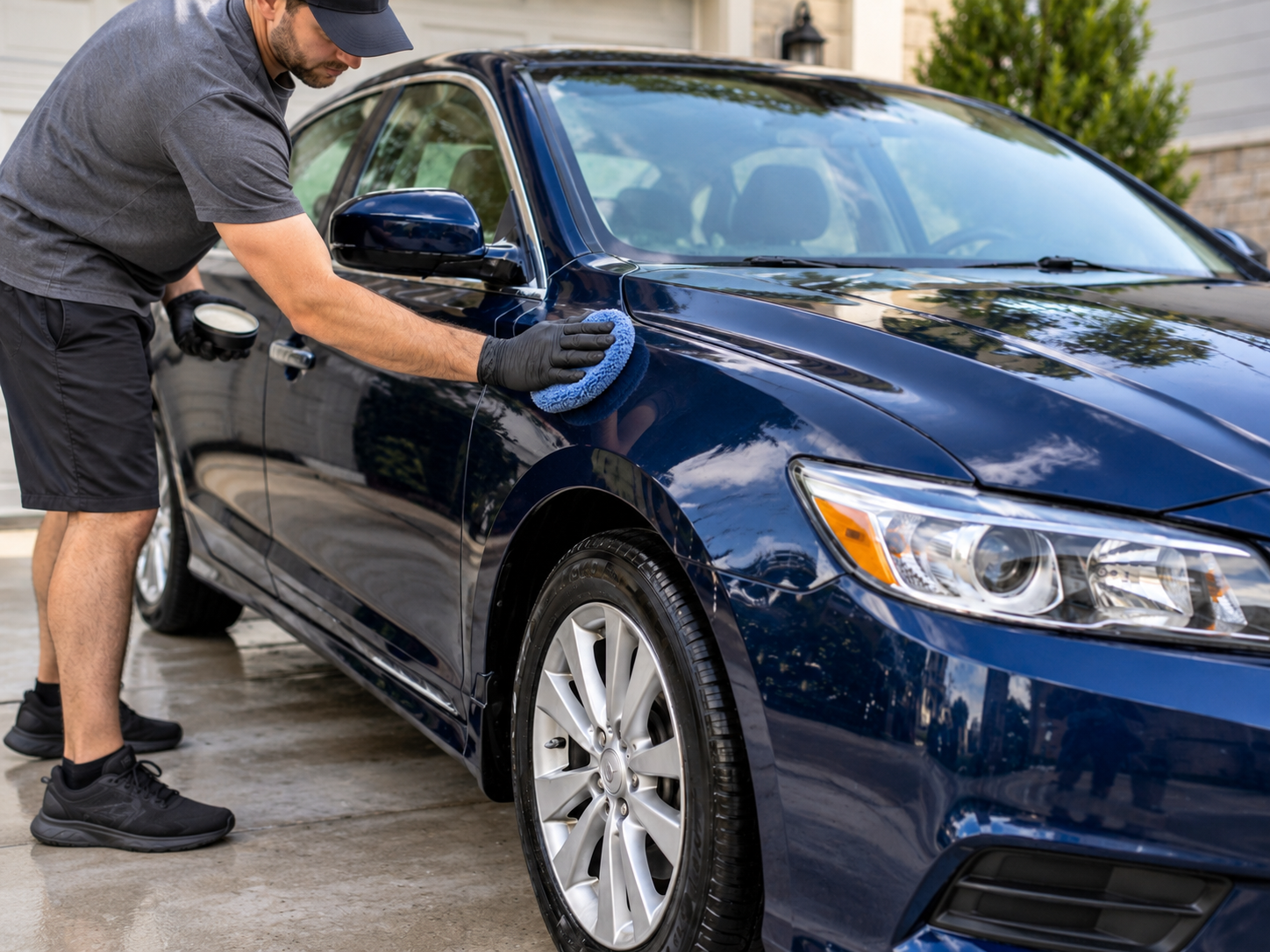
After correcting or refinishing faded paint, applying an appropriate protective treatment helps preserve the vehicle’s appearance and minimize future deterioration.
Several paint protection options are available:
- Carnauba Wax: Enhances gloss and creates a temporary protective barrier against environmental contaminants.
- Paint Sealants: Provide a protective coating that can offer longer-lasting durability than many conventional wax products.
- Ceramic Coatings: Create a durable, hydrophobic protective layer that helps resist environmental contamination and simplifies routine cleaning.
- Paint Protection Film (PPF): Adds a physical protective layer that helps reduce damage from stone chips, road debris, and minor surface abrasions.
The best treatment depends on the vehicle’s condition, usage, storage environment, and maintenance requirements. Protective products should only be applied once the finish has been properly prepared and any newly refinished surfaces have completed the necessary curing period.
Paint Correction vs. Paint Refinishing: Which Is Better for Faded Paint?
Understanding the difference between paint correction and paint refinishing is essential when deciding how to restore faded car paint.
Although both processes can improve a vehicle’s appearance, they address different levels of paint deterioration.
Feature | Paint Correction | Paint Refinishing |
Primary Purpose | Restore gloss and correct surface imperfections | Repair or replace damaged paint coatings |
Best For | Light fading, oxidation, swirl marks, and surface scratches | Severe fading, peeling clear coat, and extensive paint damage |
Process | Machine polishing and abrasive correction | Surface preparation, paint application, and clear coat finishing |
Original Paint Preservation | Retains existing paint while removing a small amount during correction | May require removing or replacing portions of the original finish |
Expected Results | Improves clarity, depth, and shine | Restores damaged areas with newly applied paint |
Ideal Vehicle Condition | Intact paint and clear coat | Deteriorated or heavily damaged paint |
For vehicles with mild fading and oxidation, paint correction is generally the preferred starting point because it can improve appearance without requiring repainting.
However, professional paint refinishing is often the more appropriate solution when the original paint has deteriorated beyond what polishing can safely correct.
Professional Automotive Paint Refinishing at Doctor Detail in Orange County
At Doctor Detail, we specialize in premium automotive detailing, reconditioning, and restoration services for luxury, exotic, and collector vehicles throughout Orange County, California. Established in 1983 and located in Costa Mesa, we provide comprehensive vehicle care for a wide range of automotive brands, including Ferrari, Porsche, BMW, Mercedes-Benz, and many other high-performance and collectible automobiles. Our detailing services include exterior and concourse detailing, paint correction, ceramic coatings, paint protection film installation, engine and undercarriage steam cleaning, and professional vehicle reconditioning.
We also offer comprehensive paint and body refinishing services designed to address a wide range of automotive paint imperfections and exterior damage. Whether your vehicle requires minor paintless dent correction, bumper refinishing, localized paint repairs, or more extensive refinishing, we can help determine the appropriate solution to restore its appearance. Our approach emphasizes careful surface preparation, attention to detail, and restoration techniques suited to the individual needs of luxury and collector vehicles.

Restore Your Vehicle’s Original Beauty With Doctor Detail in Orange County
Learning how to restore faded car paint is essential for maintaining your vehicle’s appearance and protecting its exterior finish. While minor oxidation and surface imperfections can often be improved through professional paint correction, more advanced damage may require specialized paint and body refinishing. Choosing the right restoration approach helps revive your vehicle’s original color, gloss, and finish while supporting its long-term preservation.
At Doctor Detail, we understand the importance of maintaining the appearance and value of luxury, exotic, and collector vehicles. Whether your Ferrari has lost its showroom shine, your Porsche needs professional paint correction, or your classic automobile requires comprehensive paint refinishing, our team is here to help. Contact Doctor Detail today to schedule a professional paint refinishing consultation in Orange County, CA, and discover how we can help bring your vehicle’s exterior back to life.


