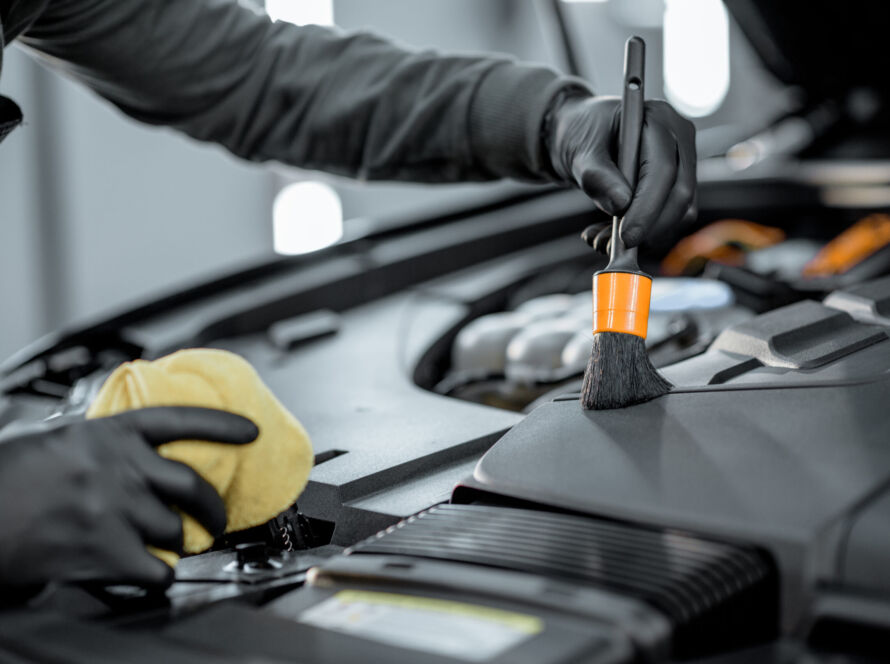
Rust is one of the most common threats to a vehicle’s long-term condition, especially on the underbody where moisture, road grime, salt, and debris collect over time. For car owners who want to preserve the value, appearance, and structural integrity of their vehicle, learning how to treat rust on a car is an important part of responsible maintenance.
While heavy corrosion may require sanding, grinding, welding, or replacement panels, surface rust can often be managed before it becomes a more serious problem. One of the most effective ways to prepare and treat the undercarriage is through professional steam cleaning. When performed correctly, steam cleaning helps remove the buildup that allows rust to spread, making it one of the best first steps in treating surface rust on a car underbody.
Why Car Underbodies Are So Prone to Rust
The underbody of a car is constantly exposed to harsh conditions. Unlike painted exterior panels that are easy to see and clean, the undercarriage is hidden from view and often neglected until rust has already developed.
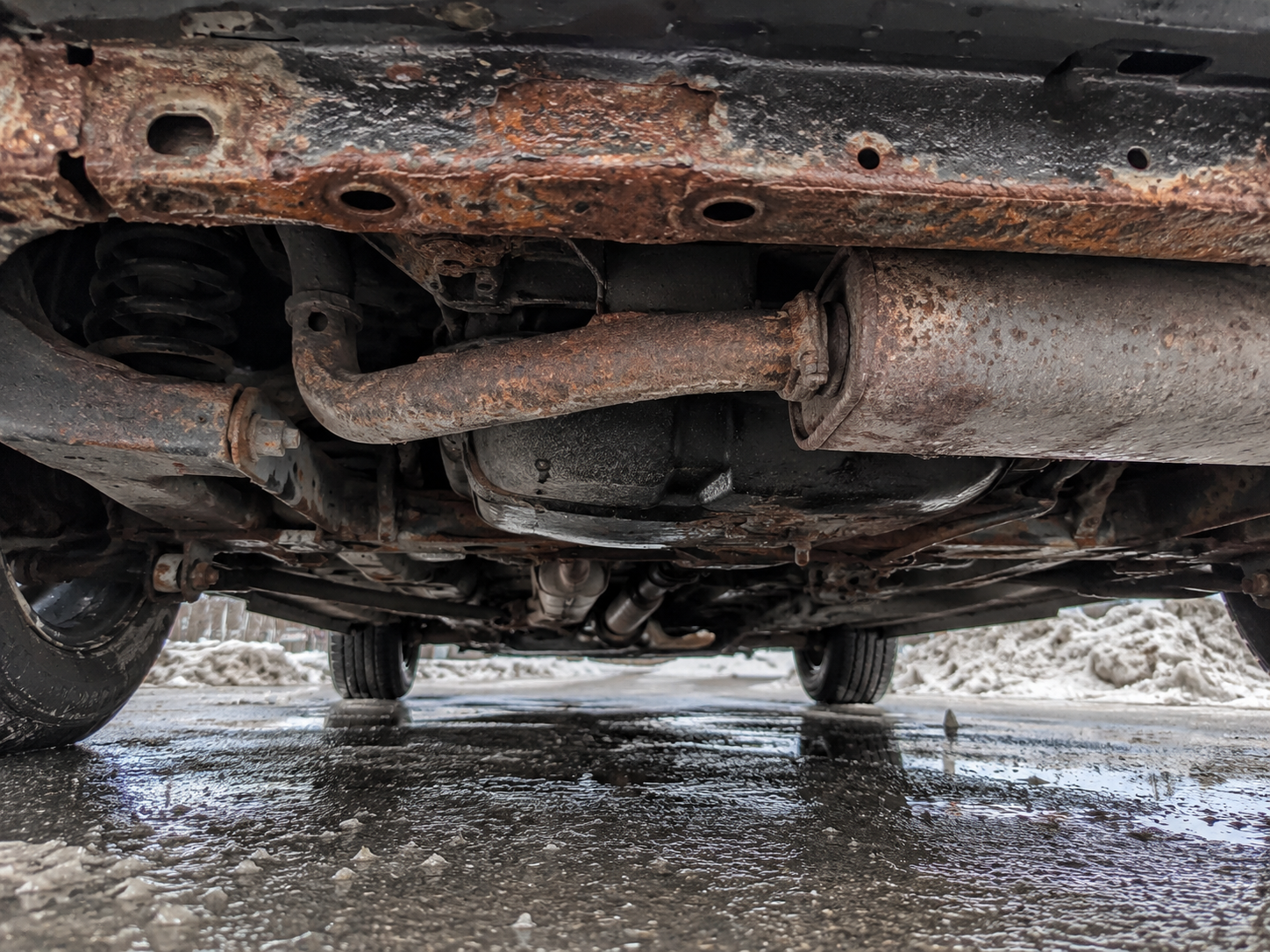
Common causes of underbody rust include:
- Moisture trapped in seams, brackets, and suspension components
- Road salt and coastal air exposure
- Mud, dirt, and organic debris packed into hard-to-reach areas
- Scratches or chips in protective coatings
- Poor drainage around undercarriage components
- Long periods without proper cleaning or inspection
For vehicles near the coast, such as cars in Southern California, salty air and marine moisture can speed up oxidation. Even high-end, classic, and collector vehicles can develop underbody surface rust if contaminants are allowed to sit on metal components for too long.
How To Treat Rust On a Car: Start with the Right Inspection
Before any treatment begins, the rust needs to be properly evaluated. Not all rust is the same, and the right solution depends on how deep the corrosion has gone.
In general, rust falls into three categories:
Surface Rust
Surface rust forms on the outer layer of exposed metal. It often appears as light orange or brown discoloration and may not yet affect the strength of the component. This is the best stage to address rust because it can often be cleaned, treated, and protected before it spreads.
Scale Rust
Scale rust develops when corrosion has progressed deeper into the metal. The surface may appear rough, flaky, or pitted. At this stage, more aggressive preparation may be needed before protective coatings can be applied.
Penetrating Rust
Penetrating rust occurs when corrosion eats through the metal. This can compromise structural components and may require professional repair, replacement, or fabrication. Steam cleaning can help reveal the extent of the damage, but it will not restore metal that has been eaten away.
Why Steam Cleaning Is One of the Best Methods for Surface Rust Preparation
Steam cleaning is highly effective because it uses high-temperature vapor to loosen and remove contaminants from areas that traditional washing may not reach. For undercarriages, this is especially useful because rust often forms under layers of dirt, grease, salt, and road film.
Steam cleaning can help with rust treatment by:
- Removing corrosive contaminants from metal surfaces
- Breaking down grease, oil, and grime without excessive water saturation
- Cleaning tight areas around suspension, brackets, wheel wells, and frame sections
- Revealing hidden rust that may be covered by dirt or buildup
- Preparing the underbody for rust inhibitors, sealants, or protective coatings
Unlike a basic rinse, steam cleaning provides a deeper level of cleaning while using less water pressure than some aggressive undercarriage washing methods. This makes it a smart option for classic, collector, exotic, and luxury vehicles that require careful handling.
How To Treat Surface Rust On a Car Underbody with Steam Cleaning
If you are researching how to treat surface rust on a car, it is important to understand that steam cleaning is typically part of the preparation and prevention process. It helps clean the affected area thoroughly so the rust can be inspected and properly treated.
Here is how the process generally works.
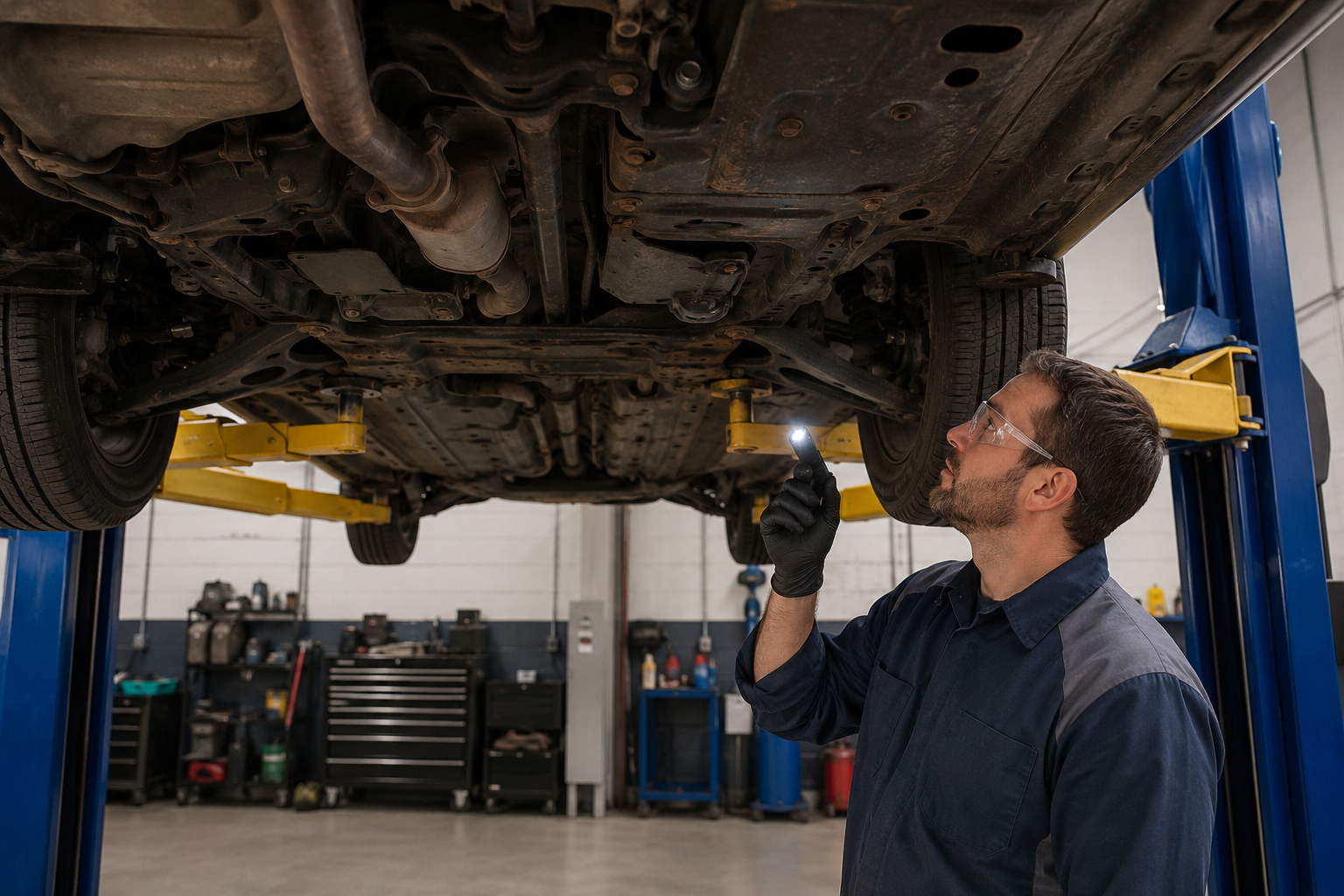
Step 1: Lift and Inspect the Vehicle
The vehicle should be safely raised or positioned so the underbody can be inspected. Areas that commonly show surface rust include:
- Frame rails
- Suspension components
- Wheel wells
- Exhaust brackets
- Subframes
- Control arms
- Undercarriage seams
- Fasteners and mounting points
A careful inspection helps determine whether the rust is only on the surface or if deeper corrosion is present.
Step 2: Steam Clean the Undercarriage
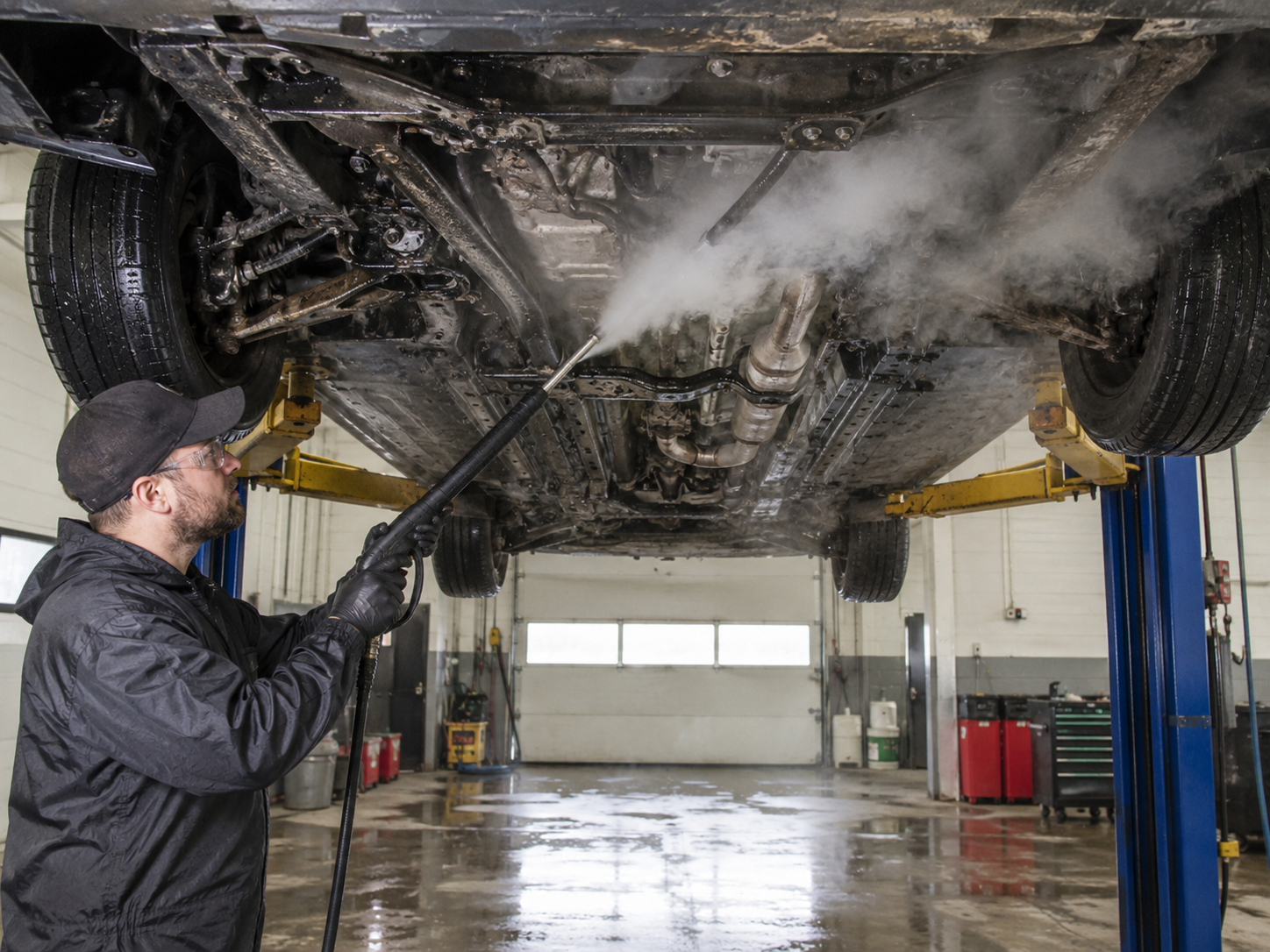
Professional undercarriage steam cleaning uses heated vapor to loosen dirt, salt, grime, and old residue from the underbody. This step is essential because rust treatment products and protective coatings work best on clean surfaces.
Steam cleaning is especially useful in tight spaces where contaminants can hide, including around suspension mounts, crevices, and seams. By removing buildup, steam cleaning allows the true condition of the metal to be seen.
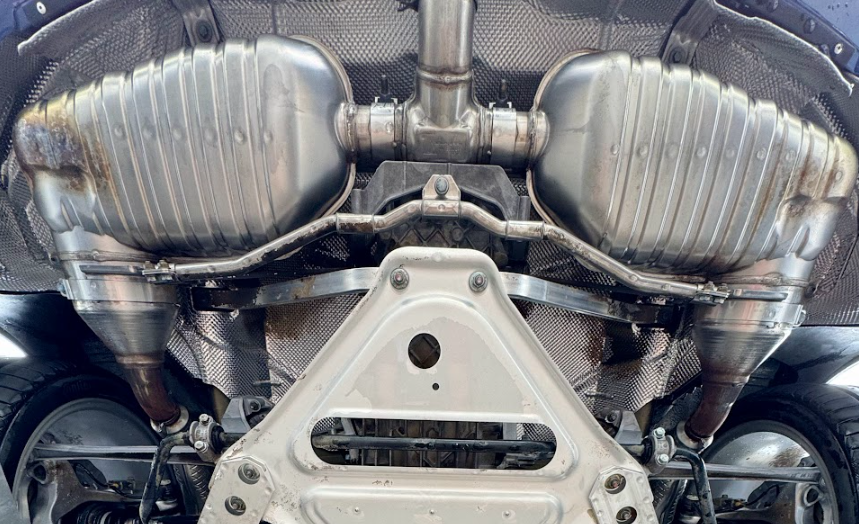
Step 3: Dry the Underbody Thoroughly
After steam cleaning, the undercarriage should be properly dried. Moisture left behind can continue to contribute to rust formation, so drying is a critical step.
Professionals may use air blowers, towels, or controlled drying time to help remove moisture from seams, corners, and hard-to-reach areas.
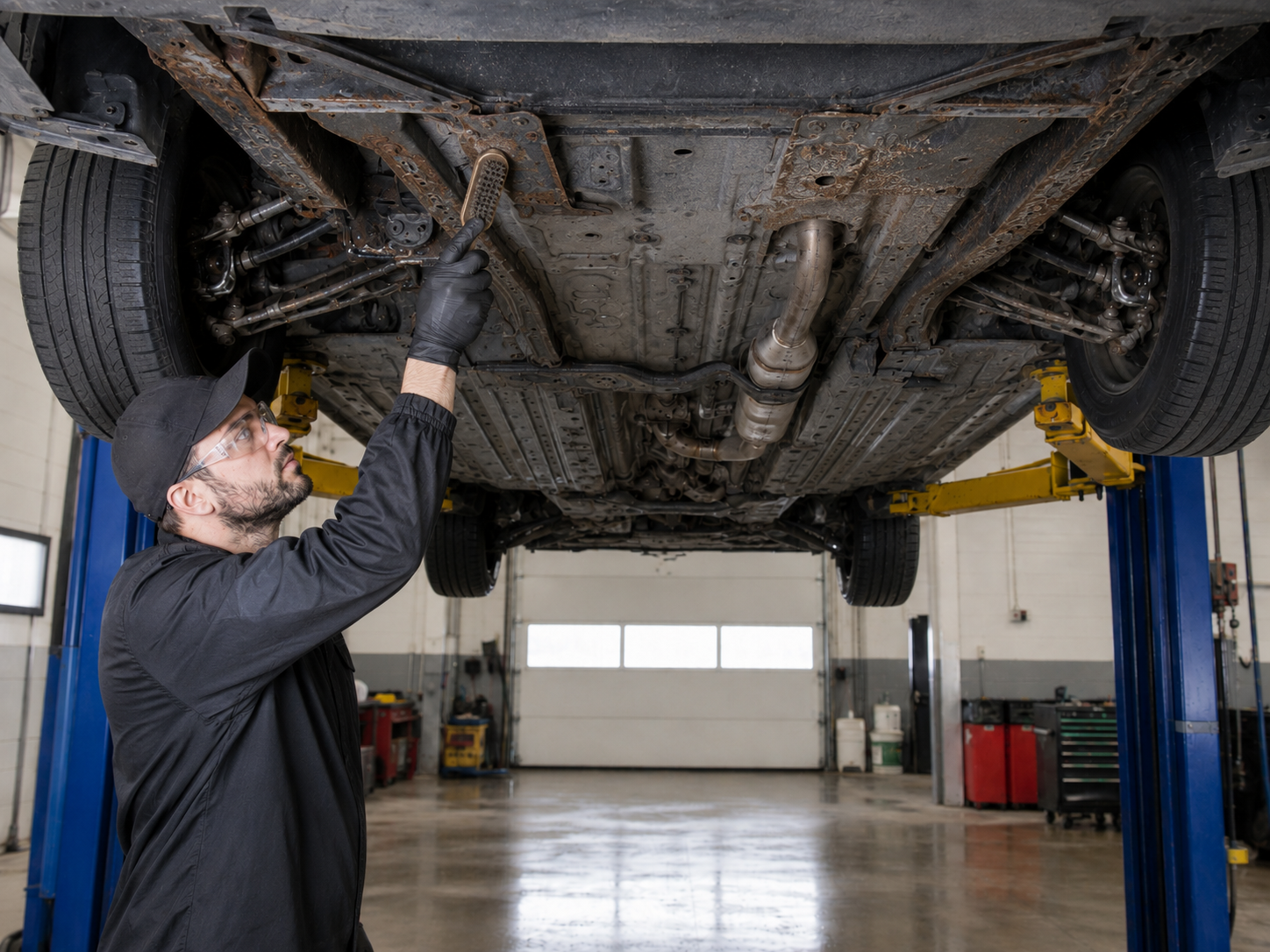
Step 4: Remove Loose Surface Rust
Once the underbody is clean and dry, loose surface rust can be addressed. Depending on the severity, this may involve light brushing, scuffing, or other surface preparation methods.
The goal is not always to strip everything aggressively. For delicate, original, classic, or collector vehicles, the approach should be careful and appropriate for the condition and value of the car.
Step 5: Apply Rust Treatment or Protective Products
After cleaning and preparation, surface rust may be treated with rust inhibitors, converters, primers, or protective coatings depending on the condition of the metal and the owner’s goals.
Possible protective options include:
- Rust inhibitor applications
- Corrosion-resistant coatings
- Undercarriage protectants
- Sealants for vulnerable metal surfaces
- Maintenance cleaning schedules to prevent future buildup
The best product depends on the type of vehicle, how it is driven, where it is stored, and how much originality the owner wants to preserve.
Steam Cleaning vs. Pressure Washing for Car Rust Treatment
Many car owners assume pressure washing is the best way to clean the underbody, but high-pressure water is not always ideal. While pressure washing can remove heavy mud and debris, it may force water into areas where moisture can become trapped.
Steam cleaning offers several advantages:
- Uses heat to break down grime more effectively
- Requires less water than traditional washing
- Reaches tight areas without excessive force
- Helps remove grease, salt, and residue
- Is better suited for delicate and high-value vehicles when performed professionally
For anyone learning how to treat rust on a car properly, the key is not just removing visible dirt. The underbody needs a deep, controlled cleaning process that prepares the surface for inspection and protection.
Can Steam Cleaning Remove Rust Completely?
Steam cleaning does not magically erase rust or rebuild damaged metal. However, it is one of the best ways to clean the underbody before treating surface rust. It removes the contaminants that contribute to corrosion and exposes the areas that need attention.
For light surface rust, steam cleaning combined with proper drying, surface preparation, and rust protection can be an effective part of a long-term maintenance plan. For severe rust, holes, flaking metal, or structural corrosion, additional repair work may be required.
Signs Your Car May Need Undercarriage Steam Cleaning
Your vehicle may benefit from professional underbody cleaning if you notice:
- Orange or brown discoloration underneath the vehicle
- Dirt, grease, or road grime collecting under the car
- Rust around wheel wells or suspension components
- A vehicle that has been exposed to coastal air
- A classic or collector car that has not had recent underbody maintenance
- Concerns about preserving long-term value
- Moisture or debris trapped in undercarriage areas
Even if the rust is not severe, early cleaning and prevention can help protect the vehicle before corrosion spreads.
About Doctor Detail in Costa Mesa
Doctor Detail in Costa Mesa provides professional detailing services for drivers who want their vehicles cleaned, protected, and maintained with care. Our team offers a wide range of interior and exterior detailing services, including undercarriage steam cleaning for vehicles that need a deeper level of attention beneath the surface.
We work with classic and collector cars, as well as luxury and exotic vehicles such as Ferraris, Porsches, Lamborghinis, BMWs, Mercedes, and more. Whether your car needs careful interior detailing, exterior paint care, underbody cleaning, or a complete detailing service, Doctor Detail is equipped to help preserve its appearance, value, and long-term condition.

Schedule Undercarriage Steam Cleaning with Doctor Detail
Knowing how to treat rust on car underbody areas starts with proper cleaning, inspection, and prevention. Steam cleaning is one of the best methods for addressing surface contamination, preparing light rust for treatment, and helping protect the undercarriage from future corrosion.
If you want to learn more about how to treat surface rust on a car or want professional help caring for your vehicle’s underbody, contact Doctor Detail in Costa Mesa today. Our team can explain your detailing options, recommend the right service for your vehicle, and help you schedule an appointment for undercarriage steam cleaning or a complete detailing package.